Warren Buffett: The Oracle of Omaha — The Greatest Investor of All Time
The extraordinary story of Warren Buffett — the boy who bought his first stock at 11, filed his first tax return at 13, and became one of the richest men in the world through patience, discipline, and the power of compound interest.
Chronica Editorial · · 6 min read
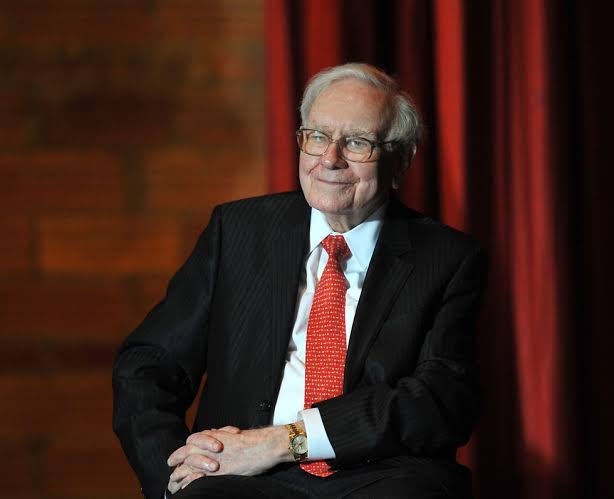
In 1942, an 11-year-old boy bought his first stock. He bought three shares of Cities Service Preferred at $38 each. The stock dropped to $27. He held on. It rose to $40. He sold. Then it soared to $200.
He learned a lesson that would define his life: patience is the most important quality an investor can have.
That boy was Warren Buffett. He would become the greatest investor of all time — the "Oracle of Omaha" — and one of the richest men in the world. But he didn't get there by being lucky. He got there by being disciplined, patient, and relentlessly rational.
The Boy Who Loved Numbers Warren Edward Buffett was born on August 30, 1930, in Omaha, Nebraska. His father was a stockbroker and later a congressman. His mother was a homemaker. The family was comfortable but not wealthy.
Warren was obsessed with numbers. He could calculate probabilities in his head. He memorized license plate numbers. He read every book about money he could find. At 6, he bought a pack of six Cokes for 25 cents and sold them for 5 cents each — a profit of 5 cents.
He filed his first tax return at 13. He deducted his bicycle as a business expense. He was already thinking like a businessman.
At 11, he bought his first stock. At 13, he delivered newspapers. By 15, he had saved $2,000 — a small fortune at the time. He bought a farm with his father's help.
He was not just a businessman. He was a student of business. He read Benjamin Graham's book Security Analysis at 19 — and it changed his life. Graham's philosophy of "value investing" — buying undervalued companies and holding them — became Buffett's guiding principle.
The Education of an Investor Buffett attended the University of Nebraska, then Columbia Business School — where Benjamin Graham taught. Graham was his hero. Buffett was the only student to get an A+ in Graham's class.
He worked for Graham's investment firm for two years, then returned to Omaha. He started his own partnership in 1956 with $100,000 — mostly from family and friends.
He was not an overnight success. He was patient. He studied companies. He looked for undervalued stocks — companies that were worth more than their market price. He bought them. He held them. He waited.
He said:
"Price is what you pay. Value is what you get."
The Making of a Billionaire Buffett's partnership grew. He bought shares in companies like American Express, Disney, and Coca-Cola. He bought a textile company called Berkshire Hathaway — and eventually took it over. He turned Berkshire Hathaway into his holding company — a vehicle for buying other companies.
He bought insurance companies, banks, newspapers, and manufacturers. He bought businesses he understood. He bought them at good prices. He held them forever.
He said:
"Our favorite holding period is forever."
He was not interested in quick profits. He was interested in long-term value. He bought companies with strong brands, loyal customers, and honest management. He held them for decades.
His most famous investments include:
Coca-Cola — bought in 1988, never sold
American Express — bought in 1964, never sold
See's Candies — bought in 1972 for $25 million, still owned
GEICO — bought in 1996, still owned
Apple — bought in 2016, still owned
He said:
"It's far better to buy a wonderful company at a fair price than a fair company at a wonderful price."
The Oracle of Omaha Buffett became famous for his annual letters to shareholders — witty, wise, and full of common sense. He became known as the "Oracle of Omaha" — a nickname he never liked but could not escape.
He lived in the same house he bought in 1958 for $31,500. He drove himself to work. He ate at the same diner. He drank Cherry Coke. He was frugal, humble, and completely uninterested in the trappings of wealth.
He said:
"Someone's sitting in the shade today because someone planted a tree a long time ago."
He planted trees. He waited. He harvested.
The Giving Pledge In 2006, Buffett made a shocking announcement. He would give away 85% of his fortune — most of it to the Bill & Melinda Gates Foundation. It was the largest charitable donation in history.
He said:
"There's no reason to have more money than you need. The rest should go to help others."
He and Bill Gates created the Giving Pledge — a commitment by billionaires to give away at least half their wealth. Over 200 billionaires have signed it.
He said:
"I want to give my kids just enough so that they would feel that they could do anything, but not so much that they would feel like doing nothing."
The Legacy Warren Buffett is one of the richest men in the world. His net worth is over $100 billion. But he is not defined by his wealth. He is defined by his wisdom, his patience, and his integrity.
He said:
"Rule No. 1: Never lose money. Rule No. 2: Never forget Rule No. 1."
He said:
"It takes 20 years to build a reputation and five minutes to ruin it. If you think about that, you'll do things differently."
He said:
"The best investment you can make is in yourself."
He invested in himself. He invested in others. He invested in the future.
Lessons from Warren Buffett's Life Start early — He bought his first stock at 11.
Be patient — He held Coca-Cola for over 30 years.
Invest in what you understand — He avoided tech stocks for decades because he didn't understand them.
Live frugally — He still lives in the house he bought in 1958.
Build a reputation — Integrity is everything.
Give back — He pledged 85% of his fortune to charity.
Never stop learning — He reads 500 pages a day.
Conclusion Warren Buffett is not just an investor. He is a teacher. He is a philosopher. He is a symbol of patience, discipline, and integrity. He proved that you don't need to be lucky to be rich. You need to be smart, patient, and disciplined.
He said:
"Someone's sitting in the shade today because someone planted a tree a long time ago."
He planted trees. He waited. He harvested. And he gave the shade to the world.