Steve Jobs: Fired From His Own Company — Then Returned to Change the World
The extraordinary story of Steve Jobs — the adopted son of a machinist who started Apple in a garage, got fired from his own company, and came back to create the iPhone and build the world's most valuable brand.
Chronica Editorial · · 7 min read
On January 9, 2007, a man in a black turtleneck and jeans walked onto a stage and said: _"Today, Apple reinvents the phone."_ The device he pulled from his pocket would reshape how humanity lives, works, and communicates. But the real story behind that moment is far more dramatic — because the man holding the iPhone had once been fired from the very company he founded.
This is the story of Steve Jobs — a story of genius, betrayal, exile, and the greatest comeback in business history.
The Boy Who Was Given Away
Steve Jobs was born on February 24, 1955, in San Francisco. His biological parents, unwed university students, gave him up for adoption. He was adopted by Paul and Clara Jobs — a machinist and an accountant who raised him in Cupertino, California, in what would soon become Silicon Valley.
Paul Jobs taught his son a lesson that would define Apple decades later. While building a fence, he insisted that even the back of the fence — the part nobody would see — must be crafted as carefully as the front. Young Steve never forgot it. Years later, he demanded that the inside of Apple computers be as beautiful as the outside — even though customers would never see it.
> _"My father believed in craftsmanship. Even the back of a fence should look great."_
The College Dropout Who Took a Calligraphy Class
Jobs enrolled at Reed College in 1972 but dropped out after just one semester. Yet, out of pure curiosity, he kept attending one strange class: calligraphy. It had no practical value at the time.
Or so he thought.
Ten years later, when designing the first Macintosh, that calligraphy knowledge came flooding back — and the Mac became the first computer with beautiful fonts and typography. Jobs later said:
> _"You can't connect the dots looking forward; you can only connect them looking backwards."_
The Garage That Started It All
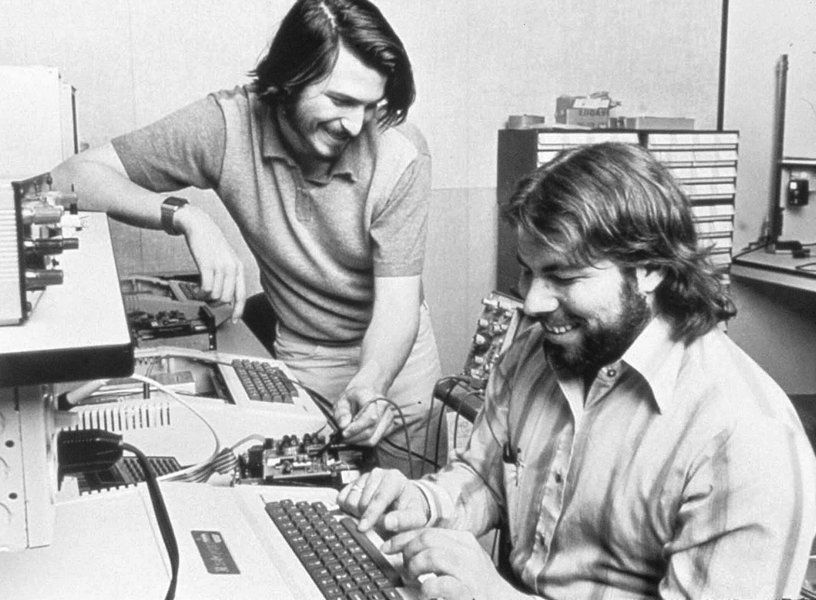
In 1976, Jobs met Steve Wozniak — a brilliant engineer who had built a homemade computer board just for fun. While Wozniak was the technical genius, Jobs saw something bigger: people would actually _want_ this.
On April 1, 1976, they founded Apple Computer in the Jobs family garage. To raise money, Jobs sold his Volkswagen van and Wozniak sold his scientific calculator. A third co-founder, Ronald Wayne, sold his 10% share back for $800 — a stake that would be worth hundreds of billions today.
Then came the avalanche:
- Apple I (1976) — the first product - Apple II (1977) — a revolutionary hit that launched the personal computer industry - By age 23, Jobs was a millionaire. By 25, famous. By 30, in charge of a $2 billion company.
At 21, he had started Apple in a garage. At 30, he was on the cover of Time magazine. It seemed nothing could stop him.
The Fall: Fired From His Own Company
In 1983, Jobs made a fateful decision — he hired John Sculley, a Pepsi executive, famously asking him:
> _"Do you want to sell sugar water for the rest of your life, or do you want to come with me and change the world?"_
But the partnership turned into a power struggle. The Macintosh (1984), despite its legendary Super Bowl ad, sold poorly. The board sided with Sculley. And in 1985, at just 30 years old, Steve Jobs was stripped of his duties and pushed out of Apple — the company he had founded in his garage.
Imagine it: the man who built Apple wasn't allowed to enter its own building. In interviews, Jobs later admitted the rejection was devastating:
> _"I was out — and very publicly out. What had been the focus of my entire adult life was gone, and it was devastating."_
Exile Years: The Failure That Became a Fortune
Instead of giving up, Jobs did two things:
1. NeXT — He founded a new computer company. It never sold in large numbers, but its software would later become the foundation of macOS and the iPhone.
2. Pixar — He bought a small graphics division from filmmaker George Lucas for $5 million. That company created Toy Story (1995) — the world's first fully computer-animated film — and went on to produce Finding Nemo, Toy Story 2, and more. When Disney later acquired Pixar, Jobs became Disney's largest individual shareholder.
Jobs later reflected on being fired:
> _"Getting fired from Apple was the best thing that could have ever happened to me. The heaviness of being successful was replaced by the lightness of being a beginner again."_
The Return: 90 Days From Bankruptcy
By 1997, Apple was dying. It had lost over $1 billion, was 90 days from bankruptcy, and had cycled through failed CEOs. In a desperate move, Apple acquired NeXT — bringing Jobs back into the company he founded.
What he did next is now taught in every business school:
- Killed 70% of products to focus on just four - Launched the colorful iMac (1998) — Apple's first hit in years - Launched the iPod (2001) — "1,000 songs in your pocket" — which transformed the music industry - Opened the iTunes Store (2003) and later the App Store (2008) — creating entire new economies
Then came the moment that changed everything. On that January day in 2007, Jobs stood on stage and built suspense: _"An iPod, a phone, and an internet communicator... Are you getting it? These are not three separate devices. This is one device."_ The audience erupted. The iPhone didn't just enter the market — it destroyed and redefined it. Today, over 2.3 billion iPhones have been sold, and the smartphone touches nearly every human life.
The iPad (2010) followed, creating the tablet market from scratch. Apple went from near-death to becoming the first company in history worth $1 trillion — then $3 trillion.
The Words That Immortalized Him
In 2005, Jobs — then fighting cancer — delivered the Stanford commencement speech that would become the most-watched graduation speech in history. It ended with a farewell he first saw as a teenager on the back cover of Popular Science:
> _"Stay Hungry. Stay Foolish."_
And perhaps his most powerful words:
> _"Your time is limited, so don't waste it living someone else's life... have the courage to follow your heart and intuition."_
The Final Chapter
Jobs battled a rare form of pancreatic cancer for eight years, continuing to lead Apple through surgeries and illness. On August 24, 2011, he resigned as CEO, writing: _"I have always said if there ever came a day when I could no longer meet my duties and expectations as Apple's CEO, I would be the first to let you know. Unfortunately, that day has come."_
He died on October 5, 2011, at just 56 years old. That night, candles, flowers, and half-bitten apples appeared outside Apple stores across the world.
Lessons from Steve Jobs' Life
1. Rejection is redirection — Being fired from Apple led to Pixar and the skills to save Apple. 2. Connect the dots backwards — Even a calligraphy class became world-changing. 3. Focus is saying no — He cut Apple's products from dozens to four, and that saved the company. 4. Craftsmanship matters — Even the parts nobody sees deserve perfection. 5. Passion is a requirement — As he said: _"The only way to do great work is to love what you do."_ 6. Stay hungry, stay foolish — Never settle, no matter how successful you become.
Conclusion
Steve Jobs wasn't a perfect man — he was famously difficult, demanding, and controversial. But he proved one thing beyond doubt: the people who are crazy enough to think they can change the world are the ones who do.
From an unwanted baby to a college dropout, from being fired in humiliation to building the most valuable company on Earth — Jobs' life is the ultimate reminder that your worst setback might just be the setup for your greatest comeback.
_What's your favorite Apple product or Steve Jobs quote? Share it in the comments below!_