Stephen Hawking: The Man Who Lived in a Wheelchair and Explored the Universe
The inspiring story of Stephen Hawking — the brilliant physicist who was diagnosed with a terminal illness at 21, given two years to live, and went on to explore black holes, write a bestselling book, and become the most famous scientist in the world.
Chronica Editorial · · 8 min read
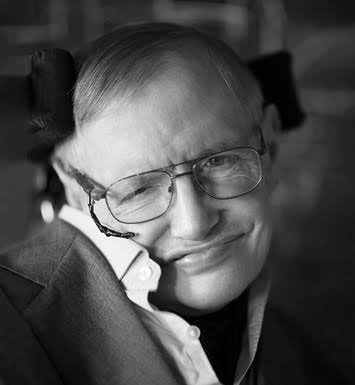
In 1963, a 21-year-old graduate student at Cambridge University noticed he was tripping over his feet. He had always been clumsy, but this was different. He went to the doctor, underwent a series of tests, and received the diagnosis that changed everything: ALS — amyotrophic lateral sclerosis — also known as Lou Gehrig's disease.
The doctor told him he had two years to live.
That young man was Stephen Hawking. He would live for another 55 years. He would become the most famous scientist in the world. He would unlock the secrets of black holes, write the best-selling science book in history, and inspire millions with his courage and his mind.
He was given two years. He lived five decades. And he spent every one of them exploring the universe.
The Boy Who Loved the Stars Stephen William Hawking was born on January 8, 1942 — exactly 300 years after the death of Galileo Galilei. His parents were both highly educated — his father a medical researcher, his mother a secretary who had studied philosophy, politics, and economics at Oxford. They lived in London during the Blitz, and Stephen was born during a time of war and uncertainty.
He was a bright but lazy student. He loved mathematics but found school boring. He was known for his wit, his love of science fiction, and his ability to think deeply about big questions. At 17, he entered Oxford University to study physics — a subject he chose because it was more interesting than biology and less demanding than mathematics.
He was not a star student. He estimated that he worked about 1,000 hours total during his three years at Oxford — less than an hour a day. But his brilliance was undeniable. He was a member of the Oxford University Boat Club and enjoyed rowing, though he never excelled at it. He was sociable, popular, and known for his sharp tongue and his love of debate.
He graduated with a first-class degree in physics in 1962 — a remarkable achievement given his workload. He moved to Cambridge to study cosmology — the study of the origin and structure of the universe. It was a field with few jobs and little money, but Stephen didn't care. He was following his curiosity.
Then he noticed the clumsiness.
The Diagnosis: Two Years to Live The diagnosis was devastating. ALS is a disease that destroys the motor neurons — the nerve cells that control voluntary movement. It gradually paralyzes the body, leaving the mind intact. Most people die within five years of diagnosis. Stephen was 21.
He sank into depression. He drank heavily. He listened to Wagner. He couldn't see the point in continuing his research — what was the use of a PhD if he would die before he finished it?
But something changed. He realized that he had never been very good at physical activities anyway. He had always been a thinker. If he was going to die, he would die thinking. He said:
"I was not very good at sport, so I decided to study physics."
He returned to his research with a new urgency. He met Jane Wilde, a young linguistics student, and fell in love. They married in 1965. She gave him a reason to live — and three children. He said:
"Every day I found myself thinking more and more about my work. What I discovered was that I could still do physics, even though I was confined to a wheelchair."
He proved the doctors wrong. Two years passed. Five years passed. Ten years passed. He was still alive. The disease progressed slowly — much slower than usual. He lost the ability to walk, then the ability to use his hands, then the ability to speak. But his mind remained sharp, brilliant, and fearless.
The Physics Revolution: Black Holes and the Big Bang Stephen Hawking did not let his body limit his mind. He made his greatest discoveries during the years when his body was failing.
He studied the origin of the universe — the Big Bang. He worked with Roger Penrose on the theory of singularities — points of infinite density at the center of black holes — and proved that the universe must have had a beginning.
Then he made his most famous discovery: black holes are not completely black. They emit radiation — now called Hawking radiation — and eventually evaporate. This was a revolutionary idea. It combined quantum mechanics and general relativity — the two great theories of modern physics — and changed how scientists understood the universe.
He wrote:
"The radiation from a black hole would be like the afterglow of a fire that has burned out."
He also proposed that the universe had no boundary — no beginning or end in time — and that the laws of physics could explain how the universe created itself from nothing. He said:
"Because there is a law like gravity, the universe can and will create itself from nothing."
He was not religious. He did not believe in God. But he believed that the universe was knowable — that science could answer the deepest questions of existence. He spent his life trying.
A Brief History of Time In 1988, Hawking published A Brief History of Time — a book for general readers explaining the origin and fate of the universe. It was a massive risk. Nobody thought a book about physics could sell. But it became a phenomenon.
It sold over 10 million copies. It was translated into 40 languages. It was on the bestseller list for years. It made Stephen Hawking a global celebrity — the most famous scientist since Einstein.
He said:
"I wanted to explain the universe to ordinary people. I didn't want it to be a mystery for them."
He succeeded. The book is still one of the best-selling science books of all time.
The Voice and the Chair As his body failed, Hawking relied on technology. He used a wheelchair with a computer and a speech synthesizer. At first, he could type with his fingers. Then he lost the use of his hands and used a switch operated by his cheek. Eventually, he used a sensor that detected his cheek movements to select letters and words.
His voice — the distinctive robotic voice of his speech synthesizer — became iconic. He never changed it, even when better voices became available. He said:
"It is the best I have heard, because it is the voice I have."
He traveled the world, gave lectures, appeared on TV, and continued to work. He visited every continent, including Antarctica. He floated in zero gravity in 2007 — at the age of 65 — fulfilling a lifelong dream.
He said:
"Life would be tragic if it weren't funny."
He laughed at his own condition. He joked about his disability. He refused to be defined by his body.
The Final Years Stephen Hawking died on March 14, 2018, at the age of 76 — 55 years after his diagnosis. He had outlived every expectation. He had lived a life of extraordinary achievement and immense influence.
His ashes were buried in Westminster Abbey — between Isaac Newton and Charles Darwin. Two of the greatest scientists in history. The third was a man in a wheelchair who explored black holes with his mind.
He said:
"Remember to look up at the stars and not down at your feet. Try to make sense of what you see and wonder about what makes the universe exist. Be curious. And however difficult life may seem, there is always something you can do and succeed at. It matters that you don't just give up."
He never gave up. He lived five decades longer than expected. He explored the universe. He inspired the world.
Lessons from Stephen Hawking's Life Your body is not your limit — His body failed, but his mind explored the cosmos.
Curiosity is the fuel of life — He never stopped asking questions.
Humor helps — He joked about his condition and made others laugh.
Love gives purpose — Jane gave him a reason to live, and his children gave him joy.
Technology can be liberation — His wheelchair and voice machine gave him freedom.
Never accept limits — He floated in zero gravity, traveled the world, and lived fully.
The universe is knowable — He believed science could answer the deepest questions.
Conclusion Stephen Hawking was not just a brilliant physicist. He was a symbol of human potential. He proved that the mind can transcend the body — that a man who could not move could explore the farthest reaches of the universe.
He said:
"I have lived with the prospect of an early death for the last 49 years. I'm not afraid of death, but I'm in no hurry to die. I have so much I want to do first."
He had so much to do. And he did it. He unlocked the secrets of black holes. He wrote the world's most famous science book. He inspired millions to look up at the stars.
He was given two years. He took 55. And he changed the universe.