Rembrandt: The Master of Light and Shadow
The story of Rembrandt van Rijn — the Dutch Golden Age painter who mastered light and shadow, painted the most famous self-portraits in history, and died poor and forgotten, only to be recognized as one of the greatest artists of all time.
Chronica Editorial · · 5 min read
In 1632, a young man from Leiden painted a group portrait of a militia company. The painting was called The Night Watch. It was unlike any group portrait ever painted — the figures were not lined up in a row; they were in motion, dramatic, alive. Light and shadow danced across the canvas.
The painting made him famous. It also made him rich. He was 26 years old.
But the same genius that made him famous would also destroy him. He was too ambitious, too experimental, too unwilling to compromise. He spent too much, lost everything, and died in poverty.
His name was Rembrandt van Rijn. He is now considered one of the greatest painters in history — the master of light and shadow, the king of self-portraits, the soul of the Dutch Golden Age.
The Miller's Son Rembrandt Harmenszoon van Rijn was born on July 15, 1606, in Leiden, a city in the Dutch Republic. His father was a miller; his mother was a baker's daughter. The family was comfortable but not wealthy. Rembrandt was the ninth of ten children.
He was sent to the University of Leiden to study philosophy, but he was not interested. He wanted to paint. He left the university and apprenticed to a local painter, then to a more famous painter in Amsterdam — Pieter Lastman.
He returned to Leiden and opened his own studio at 18. He was ambitious and talented. He painted portraits, landscapes, and historical scenes. He was not yet a master, but he was learning.
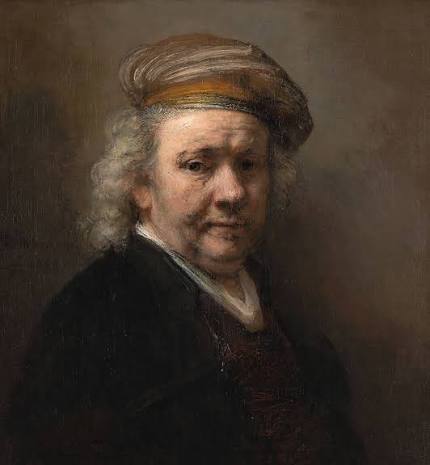
The Master of Light and Shadow Rembrandt's genius was his use of light and shadow — a technique called chiaroscuro. He would paint a single light source illuminating a face or a figure, with the rest of the canvas disappearing into darkness. It was dramatic, intimate, and deeply emotional.
He painted biblical scenes, mythological scenes, and portraits. He painted himself — over 80 self-portraits — from youth to old age. He painted his wife, Saskia, his children, and his lovers.
He said:
"Choose a master who is a master of light and shadow. That is the secret of painting."
The Night Watch In 1642, Rembrandt painted The Night Watch — a group portrait of a militia company. It was revolutionary. Instead of a static row of faces, he painted a dynamic scene — men preparing for battle, a drummer, a flag bearer, a dog. Light and shadow created drama and depth.
The painting was criticized by some of the men who paid for it — they wanted to be seen clearly, not hidden in shadows. But it was a masterpiece. It made Rembrandt famous.
It also marked the beginning of his decline.
The Tragedies Rembrandt's personal life was full of tragedy. His wife Saskia died in 1642 — the same year as The Night Watch — at the age of 29. They had four children; only one, Titus, survived to adulthood. Rembrandt was devastated.
He had a relationship with his maid, Geertje Dircx, who sued him for breach of promise. He had her imprisoned in a workhouse. He then had a relationship with another maid, Hendrickje Stoffels, who became his common-law wife and the mother of his daughter.
He spent too much money. He bought art, antiques, and curiosities. He lived beyond his means. In 1656, he was declared insolvent. His house, his possessions, and his art collection were sold at auction. He was bankrupt.
He moved to a small house in Amsterdam. He continued to paint — but he was no longer famous. He was no longer rich. He was no longer respected.
The Final Years Rembrandt's last years were painful. Hendrickje died in 1663. Titus died in 1668 — the same year Rembrandt painted his last self-portrait. He was alone.
He died on October 4, 1669, at the age of 63. He was buried in an unmarked grave in the Westerkerk in Amsterdam. He had nothing. He was forgotten.
But his paintings survived. And they were magnificent.
The Legacy Rembrandt is now considered one of the greatest painters in history. His self-portraits are among the most famous images in art. His use of light and shadow influenced generations of artists — from Van Gogh to Francis Bacon.
He painted over 600 paintings, 300 etchings, and 2,000 drawings. He painted the human soul — its joy, its grief, its loneliness, its dignity.
He said:
"Painting is the art of expressing the invisible through the visible."
He expressed the invisible. He painted the soul. He was Rembrandt.
Lessons from Rembrandt's Life Master your craft — He mastered light and shadow better than anyone.
Be ambitious — He painted what he wanted, not what was expected.
Expect tragedy — He lost his wife, his children, his money, and his fame. He kept painting.
Don't compromise — He refused to paint what others wanted. He painted what he saw.
Legacy outlives poverty — He died poor. His art lives forever.
Self-portraits are soul-searching — He painted himself 80 times. He knew himself.
Light is everything — He said: "Choose a master who is a master of light and shadow."
Conclusion Rembrandt van Rijn was the master of light and shadow. He painted the human soul — its joy, its grief, its loneliness, its dignity. He died poor and forgotten. But his art survived.
He said:
"A painting is finished when the artist says it is finished."
He finished his paintings. He finished his life. He was Rembrandt.