Pablo Picasso: The Man Who Broke Art and Rebuilt It
The story of Pablo Picasso — the child prodigy who became the most influential artist of the 20th century, co-founded Cubism, and changed the way we see the world.
Chronica Editorial · · 7 min read
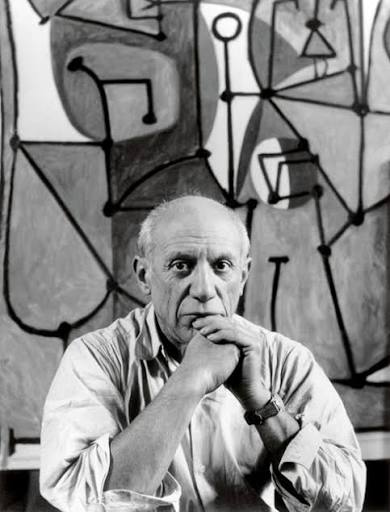
In 1907, a young Spanish artist painted a picture of five women in a brothel. Their faces were not faces — they were masks. Their bodies were not bodies — they were geometric shapes. The painting was ugly, shocking, and completely unlike anything anyone had ever seen.
It was called Les Demoiselles d'Avignon. It is now considered the most important painting of the 20th century.
The artist was Pablo Picasso. He was 25 years old. He had just broken art — and he was about to rebuild it.
The Child Prodigy Pablo Diego José Francisco de Paula Juan Nepomuceno María de los Remedios Cipriano de la Santísima Trinidad Ruiz y Picasso was born on October 25, 1881, in Málaga, Spain. His father was a painter and art teacher. His mother was a woman of strong character who encouraged her son's talent.
Picasso was a prodigy. He could draw before he could speak. He said:
"I could draw before I could talk. I could draw like Raphael when I was 12."
His father recognized his talent and gave him his own brushes and paints. He taught him academic painting — the traditional style of the great masters. Picasso mastered it quickly.
The family moved to Barcelona in 1895. Picasso entered the School of Fine Arts — the same school his father taught at. He was only 13. He was admitted after completing in one day an entrance exam that took other students a month.
He was bored. He skipped classes. He spent his time in the cafes and brothels of Barcelona, sketching the people he saw. He was not interested in painting like Raphael. He wanted to paint like Picasso.
The Blue Period In 1900, Picasso moved to Paris — the art capital of the world. He was 19 years old, poor, and unknown. He shared an apartment with his friend Carlos Casagemas. They were inseparable.
In 1901, Casagemas killed himself over a failed love affair. Picasso was devastated. He descended into depression. His paintings turned blue — literally. He painted beggars, prostitutes, the blind, the lonely. The color blue dominated everything.
It was called the Blue Period. It was the first time Picasso's work was recognizably his own.
He said:
"I paint objects as I think them, not as I see them."
The Rose Period In 1904, Picasso met Fernande Olivier — a model who became his lover and muse. His depression lifted. His paintings turned pink and warm. He painted circus performers, acrobats, and harlequins. It was called the Rose Period.
He was finding his voice. But he was not yet famous.
Les Demoiselles d'Avignon In 1907, Picasso painted the picture that changed everything. Les Demoiselles d'Avignon was a violent, shocking, revolutionary image. It was inspired by African masks, which Picasso had seen in a museum. It broke every rule of Western art — perspective, proportion, beauty.
His friends were horrified. Even his fellow artists were shocked. Henri Matisse called it a hoax. Georges Braque said: "It's like drinking petrol."
But the painting opened a door. It was the beginning of Cubism.
The Birth of Cubism Cubism was the most radical artistic movement of the 20th century. It rejected the idea that art should imitate reality. Instead, it tried to show objects from multiple angles at the same time — breaking them into geometric shapes and reassembling them.
Picasso and Georges Braque developed Cubism together. They were inseparable — like "two mountain climbers roped together," Braque said. They painted in browns and grays, analyzing forms, breaking them apart, putting them back together.
It was called Analytical Cubism. Then came Synthetic Cubism — when they started adding collage elements, pieces of newspaper, and other materials to their paintings.
Cubism changed art forever. It influenced painting, sculpture, architecture, and design. It was the beginning of modern art.
The Many Women Picasso's personal life was as turbulent as his art. He had many lovers, many wives, and many muses. He was not a kind man. He was possessive, jealous, and sometimes cruel.
His women included:
Fernande Olivier — his first love, who stayed with him during the Blue and Rose periods.
Olga Khokhlova — a Russian ballerina who became his first wife. She was elegant and conventional. He was not.
Marie-Thérèse Walter — a young blonde woman who became his lover when she was 17 and he was 45. She inspired some of his most beautiful paintings.
Dora Maar — a photographer and intellectual who inspired his Weeping Woman series. She was devastated by the end of their relationship.
Françoise Gilot — a painter who was the only woman to leave him. She said: "I realized that if I stayed, I would be destroyed."
Jacqueline Roque — his second wife, who devoted herself to him until his death.
He said:
"When I die, it will be a shipwreck. When a big ship goes down, many people go with it."
Guernica In 1937, German and Italian planes bombed the town of Guernica in northern Spain — an act of terror against civilians during the Spanish Civil War. Picasso was horrified. He painted Guernica — a massive mural showing the suffering of war.
It is one of the most powerful anti-war paintings ever created. It shows a woman screaming, a horse dying, a soldier's severed arm, a child dead in its mother's arms. It is black, white, and gray — no color, only death.
Picasso said:
"I am not a painter of wars. I am a painter of peace."
But Guernica was his greatest protest. It was his anger, his grief, his humanity on canvas.
The Old Master Picasso lived a long life. He continued to paint, sculpt, and experiment until the end. He worked in many styles — Cubism, Neoclassicism, Surrealism. He reinvented himself constantly.
He said:
"I am always doing that which I cannot do, in order that I may learn how to do it."
He died on April 8, 1973, at the age of 91. He was one of the most prolific artists in history — creating over 50,000 works of art. He was also one of the wealthiest.
He said:
"I want to live like a poor man with lots of money."
He did.
The Legacy Picasso was not just an artist. He was a force of nature. He broke every rule of art and created new ones. He was not a perfect man — he was selfish, cruel, and sometimes monstrous. But he was a genius.
He said:
"Every child is an artist. The problem is how to remain an artist once we grow up."
He remained an artist. He never stopped creating. He never stopped breaking rules. He never stopped being Picasso.
Lessons from Pablo Picasso's Life Break the rules — He shattered artistic conventions and created new ones.
Be prolific — He created over 50,000 works. Quantity leads to quality.
Reinvent yourself — He changed styles constantly. He never stayed the same.
See differently — Cubism showed the world from many angles at once.
Art is not decoration — Guernica was a protest, a cry of pain.
Genius has a dark side — He was brilliant, but also selfish and cruel.
Never stop learning — He said: "I am always doing that which I cannot do."
Conclusion Pablo Picasso was the most influential artist of the 20th century. He changed how we see art — and how we see the world. He was a child prodigy, a revolutionary, a genius, and a monster.
He said:
"Art washes away from the soul the dust of everyday life."
He washed away the dust. He broke art. He rebuilt it. He was Picasso.