Nelson Mandela: 27 Years in Prison — And the Forgiveness That Saved a Nation
The extraordinary story of Nelson Mandela — the freedom fighter who spent 27 years in prison for opposing apartheid, then walked free and forgave his captors, leading South Africa from racial war to democracy.
Chronica Editorial · · 10 min read
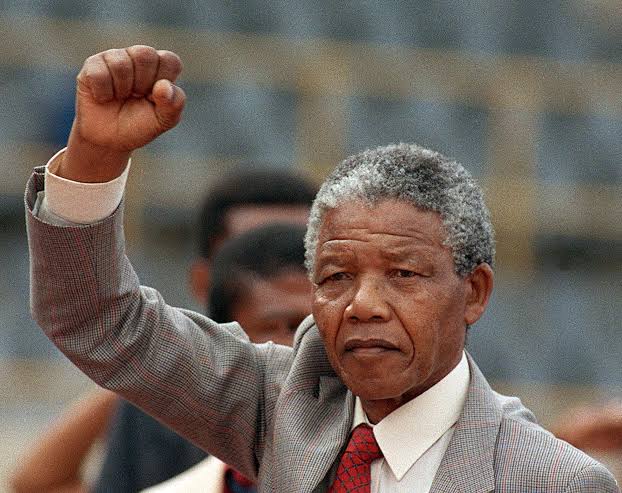
On February 11, 1990, a 71-year-old man walked out of Victor Verster Prison in South Africa, holding his wife's hand and raising his fist to the sky. He had been in prison for 27 years. He had been offered freedom many times — but always on the condition that he compromise his principles.
He refused. Every time.
When he finally walked free, the world expected revenge. They expected a bloody revolution. What they got instead was one of the greatest acts of forgiveness in human history — and a nation that was saved from civil war by one man's refusal to hate.
This is the story of Nelson Mandela.
The Boy Who Was Named "Troublemaker" Nelson Rolihlahla Mandela was born on July 18, 1918, in Mvezo, a tiny village in the Eastern Cape of South Africa. His father was a tribal chief, and his mother was the third of his four wives. His name, Rolihlahla, literally means "pulling the branch of a tree" — but colloquially, it means "troublemaker."
He was the first in his family to attend school. On his first day, his teacher gave him the English name "Nelson" — because African names were too difficult for the British colonizers to pronounce.
His father died when he was nine, and he was sent to live with a regent chief who raised him as his own. He attended a Methodist school, then the University of Fort Hare — the only black university in South Africa at the time. It was there that he began to understand the injustice around him.
The System of Apartheid South Africa was a country divided by race. The white minority — about 15% of the population — controlled everything: the government, the land, the wealth, the courts, the police. Black South Africans were forced to live in separate areas, attend separate schools, use separate hospitals, and carry passes that restricted their movement.
This system was called apartheid — an Afrikaans word meaning "apartness." It was not just discrimination. It was a legal, systematic, and brutal system of racial oppression that stripped black South Africans of their rights, their dignity, and their future.
Mandela joined the African National Congress (ANC) in 1944 — a political party fighting for the rights of black South Africans. He became a leader of the ANC Youth League, organizing protests, boycotts, and strikes.
At first, the movement was peaceful. They followed the example of Mahatma Gandhi, who had lived in South Africa and used non-violent resistance. But the government responded with violence. Protesters were shot, arrested, and killed. The Sharpeville Massacre of 1960, where police killed 69 unarmed protesters, changed everything.
The ANC was banned. Mandela went underground. He helped create Umkhonto we Sizwe — "The Spear of the Nation" — the armed wing of the ANC. He was still committed to peace, but he believed that non-violence alone would never defeat a government that used guns against children.
He traveled secretly across Africa and Europe, raising support and training as a guerrilla fighter. He was called the Black Pimpernel — a reference to the elusive hero of the French Revolution.
The Trial and the Sentence In 1962, Mandela was arrested. In 1964, he stood trial in the famous Rivonia Trial, accused of sabotage and conspiracy to overthrow the government. He faced the death penalty.
His speech from the dock became one of the most famous in history:
"I have fought against white domination, and I have fought against black domination. I have cherished the ideal of a democratic and free society in which all persons live together in harmony and with equal opportunities. It is an ideal which I hope to live for and to achieve. But if needs be, it is an ideal for which I am prepared to die."
He was sentenced to life imprisonment.
Robben Island: The Prison That Could Not Break Him Mandela was sent to Robben Island — a maximum-security prison off the coast of Cape Town. The conditions were brutal. He was given a small cell, a thin mat, and a bucket for a toilet. He was forced to break rocks in a limestone quarry, day after day, in the blazing sun. The limestone damaged his eyes — the damage lasted for the rest of his life.
He was allowed one visitor and one letter every six months. The letters were often censored or withheld. His mother died, and he was not allowed to attend her funeral. His eldest son died, and he was not allowed to attend his funeral either.
But Mandela did not break. He studied law through correspondence courses. He learned Afrikaans — the language of his oppressors — so he could understand them. He taught fellow prisoners, organized protests inside the prison, and demanded better conditions.
He spent 18 years on Robben Island. Then he was moved to Pollsmoor Prison, and finally to Victor Verster Prison, where he spent his final years in a comfortable house — a sign that the government was trying to negotiate.
The Offer He Refused Throughout his imprisonment, the South African government offered Mandela freedom — many times. But there was always a condition: he must renounce violence. He must accept the homeland system. He must compromise.
He refused. He would not trade his principles for his freedom. He would not abandon his people. He would not accept a deal that left apartheid intact.
He said:
"Only free men can negotiate. A prisoner cannot enter into contracts."
The World Rallies While Mandela was in prison, the world began to turn against apartheid. Students, activists, and governments around the world called for his release. The United Nations imposed sanctions. Musicians wrote songs. Protesters marched. The anti-apartheid movement became a global cause.
In 1980, the ANC launched the "Free Nelson Mandela" campaign. His face appeared on posters, T-shirts, and walls across the world. He became the most famous political prisoner on Earth.
In 1985, President P.W. Botha offered Mandela freedom if he renounced violence. Mandela's daughter Zindzi read his response to a cheering crowd:
"I am not a violent man... It was only when all other forms of resistance were no longer open to us that we turned to armed struggle. Let him renounce violence. Let him say that he will dismantle apartheid."
The crowd erupted. Mandela had refused again.
The Release By 1989, South Africa was in crisis. The economy was collapsing. International sanctions were crippling the country. Protests and violence were escalating. The new president, F.W. de Klerk, realized that apartheid could not survive.
On February 2, 1990, de Klerk announced the unbanning of the ANC and the imminent release of Nelson Mandela.
On February 11, 1990, Mandela walked free. The whole world watched. Millions of people around the globe saw a man who had spent 27 years in prison walk out with his head held high and his fist raised in victory.
That evening, he spoke to a crowd of thousands in Cape Town:
"Today, the majority of South Africans, black and white, recognize that apartheid has no future. The time for the healing of the wounds has come. The moment to bridge the chasms that divide us has come. The time to build is upon us."
The Forgiveness Mandela's greatest act was not his release. It was what he did next.
South Africa was on the brink of civil war. Black South Africans were furious — they had suffered for centuries. White South Africans were terrified — they feared revenge. The country could have descended into a bloodbath.
Mandela chose forgiveness.
He visited the prison where he had been held. He met with his former captors. He invited his white prison guard to his inauguration. He said:
"No one is born hating another person because of the color of his skin, or his background, or his religion. People must learn to hate, and if they can learn to hate, they can be taught to love, for love comes more naturally to the human heart than its opposite."
He negotiated with de Klerk, his former enemy, to end apartheid peacefully. Together, they won the Nobel Peace Prize in 1993.
In 1994, South Africa held its first democratic election — the first time all races could vote. Mandela won. On May 10, 1994, he was inaugurated as the first black president of South Africa.
He invited his former prison guards to the ceremony. He saluted them. The world wept.
The President Mandela served only one term — five years — as president. He could have stayed in power for life. He chose to step down. He said:
"I have walked that long road to freedom... But I can rest only for a moment, for with freedom come responsibilities, and I dare not linger, for my long walk is not yet ended."
His presidency was not perfect. He faced enormous challenges — poverty, crime, inequality, and a divided nation. But he established the Truth and Reconciliation Commission, which allowed victims and perpetrators of apartheid to tell their stories and seek forgiveness. He built a foundation for a democratic South Africa.
He retired in 1999 and spent his remaining years fighting AIDS, advocating for children, and serving as a global symbol of peace and justice.
The Final Years Mandela's health declined in his later years. He lost his son to AIDS. He became frail. But his spirit never weakened.
On his 90th birthday, the world celebrated. Concerts were held in his honor. Leaders from every country praised him. He was called the father of his nation, the greatest leader of his time, a moral compass for the world.
He died on December 5, 2013, at the age of 95. The world mourned. Over 100 heads of state attended his funeral. Millions watched on television.
Barack Obama, the first black president of the United States, spoke at his memorial:
"We will not likely see the likes of Nelson Mandela again. So it falls to us, as best we can, to forward the light that he shined."
Lessons from Nelson Mandela's Life Principles are worth suffering for — He spent 27 years in prison rather than compromise his beliefs.
Forgiveness is strength, not weakness — He forgave his captors and saved his country from civil war.
Patience wins — He waited 27 years. He never gave up.
Education is power — He studied in prison, learned Afrikaans, and taught others.
Leadership is sacrifice — He served one term and stepped down, unlike most African leaders of his time.
Hate destroys the hater — He said: "Resentment is like drinking poison and then hoping it will kill your enemies."
True freedom is collective — He did not fight for himself. He fought for everyone.
Conclusion Nelson Mandela's life is the story of the 20th century — the struggle against colonialism, racism, and oppression. He was a man who could have chosen violence, revenge, and power. Instead, he chose forgiveness, humility, and service.
He was not a saint. He admitted his flaws. He made mistakes. But he was a giant — a man who rose above his own suffering to lift an entire nation.
He said:
"What counts in life is not the mere fact that we have lived. It is what difference we have made to the lives of others."
He made a difference. He changed a country. He inspired the world.
He will never be forgotten.