Mother Teresa: The Woman Who Left Everything to Serve the Poorest of the Poor
The inspiring and controversial story of Mother Teresa — the Albanian nun who left a comfortable life to serve the dying and destitute in Calcutta, won the Nobel Peace Prize, and spent her life serving the 'poorest of the poor'.
Chronica Editorial · · 8 min read
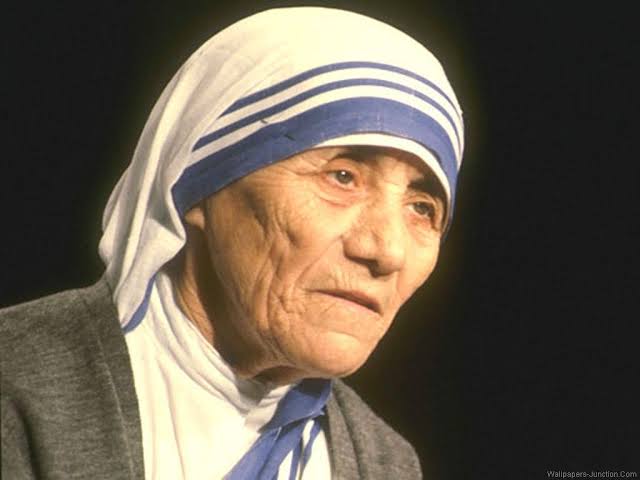
On a crowded street in Calcutta, India, in 1948, a small woman in a white and blue sari knelt beside a dying man lying in the gutter. He was covered in sores, filthy, and abandoned by everyone. She picked him up, carried him to a home she had created for the dying, and stayed with him until he died.
That woman was Mother Teresa. She had left her convent, her comfortable life, and her teaching career to serve the poorest people on Earth. She had no money, no organization, and no plan — only a burning conviction that God had called her to serve the destitute.
She became one of the most admired women in history — a Nobel Peace Prize winner, a saint to millions. But she also became one of the most controversial figures of the 20th century. Her story is not simple. It is a story of extraordinary compassion, deep faith, and painful contradictions.
The Girl from Albania Anjezë Gonxhe Bojaxhiu was born on August 26, 1910, in Skopje, in the Ottoman Empire — now the capital of North Macedonia. Her family was Albanian, Catholic, and moderately wealthy. Her father was a merchant who died when she was eight years old, leaving her mother to raise three children alone.
Her mother was a deeply religious woman who taught her children to care for the poor. She often invited destitute people to eat with the family. Anjezë watched her mother wash the wounds of a sick neighbor. The lesson stayed with her forever.
By age 12, Anjezë felt a calling to religious life. She wanted to be a missionary and serve the poor in India. At 18, she left home for Ireland to join the Sisters of Loreto — a Catholic order that sent missionaries to India.
She never saw her mother again.
The Teacher of Calcutta Anjezë took the name Sister Teresa after St. Thérèse of Lisieux, the patron saint of missionaries. She arrived in India in 1929 and began her novitiate in Darjeeling, a hill station in the Himalayas. She learned Bengali, studied nursing, and took her first vows in 1931.
She was assigned to teach at St. Mary's School in Calcutta — a prestigious school for wealthy girls. She taught geography and history, became the school's principal, and lived a comfortable, orderly life. She was known for her discipline, her neatness, and her quiet smile.
For nearly 20 years, Sister Teresa lived behind the walls of her convent, teaching rich girls and praying. She was content. But she was not fulfilled.
The Call: "I Thirst" On September 10, 1946, on a train to Darjeeling, Sister Teresa experienced something that would change her life forever. She heard what she described as a call from Jesus: "I thirst." It was a call to serve him in the poorest of the poor — the dying, the lepers, the abandoned.
She called it "Inspiration Day" — the day she received her mission. She later wrote:
"I was to leave the convent and help the poor while living among them. It was an order. To fail would have been to break the faith."
For two years, she waited. She wrote to the Vatican, asking for permission to leave her order and live among the poor. She was denied. She wrote again. Denied. She waited. Finally, in 1948, the Pope granted her a special dispensation — permission to live outside the convent as a solitary missionary.
She walked out of the convent wearing a white cotton sari with a blue border — the dress of the poorest women in Calcutta. She had five rupees in her pocket. She never wore anything else for the rest of her life.
The Slums of Calcutta Calcutta in 1948 was a city of poverty and suffering. Partition had created millions of refugees. Slums were packed with families living in cardboard shacks and on sidewalks. People were dying in the streets, without care, without dignity, without love.
Mother Teresa went to the slums. She lived with the poorest families. She learned to wash the wounds of the sick, care for the dying, and clean the filth. She started a school in a slum, teaching children in the open air using a stick to write in the dirt.
Her first home for the dying was a former temple — an abandoned building where people came to die. She called it Nirmal Hriday — "Place of the Pure Heart." She and the sisters who joined her — mostly former students from St. Mary's — would search the streets for dying people, carry them to the home, wash them, feed them, and let them die with dignity.
She was not curing them. She was not saving them. She was loving them.
She said:
"A beautiful death is for people who lived like animals to die like angels — loved and wanted."
The Missionaries of Charity In 1950, Mother Teresa founded a new religious order: the Missionaries of Charity. Its mission was to serve "the poorest of the poor." Its members took a fourth vow — wholehearted free service to the poorest of the poor.
The order grew quickly. Sisters came from around the world — young women who wanted to give their lives to service. They lived in extreme simplicity, owning nothing, sharing everything. They worked in slums, hospitals, leper colonies, and homes for orphans and the dying.
Today, the Missionaries of Charity has over 4,500 sisters in more than 130 countries. It runs homes for the dying, orphanages, schools, leper colonies, and AIDS hospices.
The Criticisms Not everyone saw Mother Teresa as a saint. Critics — including journalists, doctors, and even some former sisters — raised serious questions about her work.
The quality of medical care. Critics argued that the homes for the dying lacked proper medical treatment. Doctors who volunteered reported that they were not allowed to prescribe pain medication, that needles were reused, and that patients were not given proper diagnoses. Mother Teresa believed that suffering was a gift — she said: "Pain and suffering have come into your life, but remember pain, sorrow, suffering are but the kiss of Jesus." Critics say this led to unnecessary suffering.
Her views on abortion and contraception. Mother Teresa opposed abortion in all circumstances and opposed contraception. She saw abortion as "the greatest destroyer of peace today." Critics say her opposition to contraception contributed to suffering and poverty.
The source of her funding. Mother Teresa accepted donations from wealthy dictators, corrupt businessmen, and controversial figures. Her critics said this made her complicit. She said she took money from anyone who offered it, to serve the poor.
Doubts about her own faith. After her death, letters revealed that Mother Teresa had spent decades in spiritual darkness — doubting God, doubting her faith, feeling abandoned. She wrote: "Where is my faith? Even deep down... there is nothing but emptiness and darkness." This revelation shocked many and humanized her in unexpected ways.
The Nobel Peace Prize In 1979, Mother Teresa was awarded the Nobel Peace Prize. She refused the ceremonial banquet — worth $7,000 — and asked that the money be given to the poor. She also refused the traditional dress, wearing her cotton sari instead.
She received the prize "for her work in bringing help to suffering humanity." She accepted it on behalf of the poorest of the poor. She said:
"The poor are Christ himself."
She used the prize money to build more homes for the dying.
The Final Years Mother Teresa's health declined in the 1980s. She suffered a heart attack, then another. She had malaria, pneumonia, and tuberculosis. She had a pacemaker installed. She was hospitalized repeatedly. She continued to work, though her body was failing.
She stepped down as head of the Missionaries of Charity in 1997, at the age of 87. She died on September 5, 1997. The world mourned. India gave her a state funeral — an honor normally reserved for heads of state.
She was beatified by Pope John Paul II in 2003 — the first step toward sainthood. She was canonized by Pope Francis in 2016, becoming Saint Teresa of Calcutta.
Lessons from Mother Teresa's Life Serve where the need is greatest — She left comfort to serve the poorest of the poor.
Small acts of love matter — She did not cure diseases or solve poverty. She loved people.
Live simply — She owned nothing. She wore the same sari for decades.
Faith can survive doubt — She doubted for decades, yet served until the end.
Dignity is a right — She believed everyone deserved to die with dignity.
You don't need money to start — She started with five rupees and a conviction.
The world is not black and white — She was admired and criticized. Both can be true.
Conclusion Mother Teresa was not a simple saint. She was a complex, flawed, and deeply human woman who did extraordinary things. She spent her life serving the poorest of the poor — the dying, the abandoned, the forgotten. She asked for nothing and gave everything.
Her critics will continue to debate her legacy. But one thing cannot be denied: she spent her life among those whom the world had discarded. She picked them up, cleaned them, held them, and loved them. She gave them dignity.
She said:
"Not all of us can do great things. But we can do small things with great love."
She did small things with great love. And she changed the world.