Michael Jordan: The Man Who Became Air
The legendary story of Michael Jordan — the boy who was cut from his high school basketball team, who went on to win six NBA championships, become the greatest basketball player of all time, and redefine what it means to be a winner.
Chronica Editorial · · 7 min read
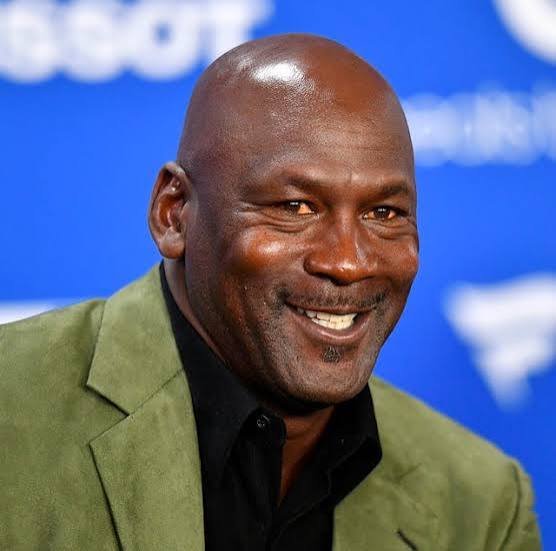
In 1978, a 15-year-old boy tried out for the varsity basketball team at Laney High School in Wilmington, North Carolina. He was tall, but not tall enough. He was good, but not good enough. He didn't make the team.
He went home, locked himself in his room, and cried.
That boy was Michael Jordan. He would become the greatest basketball player in history — a six-time NBA champion, five-time MVP, and the most famous athlete on Earth. But he never forgot the day he was cut.
He said:
"Whenever I was working out and got tired and figured I ought to stop, I'd close my eyes and see that list in the locker room without my name on it. That usually got me going again."
He turned rejection into fuel. And he burned brighter than anyone before or since.
The Boy Who Loved Baseball Michael Jeffrey Jordan was born on February 17, 1963, in Brooklyn, New York, but grew up in Wilmington, North Carolina. His father, James, was a maintenance worker; his mother, Deloris, was a bank teller. The family was working-class, disciplined, and competitive.
Michael loved baseball first. He dreamed of playing in the major leagues. But he was also athletic, and his older brother Larry was a talented basketball player. Michael wanted to be like Larry — even though Larry was shorter.
He practiced constantly. He played on playgrounds, in gyms, and in his backyard. He challenged anyone to a game. He hated losing more than he loved winning.
At Laney High School, he was cut from the varsity team as a sophomore. He played junior varsity and dominated — averaging 25 points per game. The next year, he made varsity. He averaged 25 points again. He was recruited by colleges across the country.
He chose the University of North Carolina — one of the most prestigious basketball programs in America.
The Shot That Made Him Famous In 1982, as a freshman at North Carolina, Jordan hit the game-winning shot in the NCAA championship game against Georgetown. It was his first taste of greatness. He said:
"That shot changed my life. It gave me confidence. It made me believe I could do anything."
He played two more years at Carolina, winning the Naismith College Player of the Year award in 1984. He left early for the NBA draft — and was selected third overall by the Chicago Bulls.
The first two picks were Hakeem Olajuwon and Sam Bowie. The Portland Trail Blazers chose Bowie — a center — over Jordan. It is considered one of the worst draft decisions in sports history.
The Rookie: Instant Superstar Jordan was an instant sensation. He averaged 28.2 points per game as a rookie — the highest scoring average by a rookie since Wilt Chamberlain. He was named Rookie of the Year. He was electrifying — a high-flying, acrobatic scorer who could dunk from the free-throw line.
He was called "Air Jordan" — a nickname that became a brand. Nike signed him to a shoe deal that changed sports marketing forever. The Air Jordan sneaker became a cultural phenomenon. It was banned by the NBA for violating uniform rules — which only made it more popular.
He said:
"I've failed over and over and over again in my life. And that is why I succeed."
The Struggle: The Pistons and the Pain Jordan was a superstar, but he could not win a championship. The Chicago Bulls were a one-man team. They lost in the playoffs year after year — to the Milwaukee Bucks, the Boston Celtics, and the Detroit Pistons.
The Pistons — known as the "Bad Boys" — were Jordan's nemesis. They beat him with physical defense, hard fouls, and psychological warfare. They eliminated the Bulls three years in a row — 1988, 1989, and 1990.
Jordan was frustrated. He was criticized. People said he was a great scorer but not a winner. He said:
"I've missed more than 9,000 shots in my career. I've lost almost 300 games. Twenty-six times, I've been trusted to take the game-winning shot and missed. I've failed over and over and over again in my life. And that is why I succeed."
The Dynasty: Six Championships In 1991, the Bulls finally broke through. They beat the Pistons — sweeping them in the Eastern Conference Finals — and then beat the Los Angeles Lakers in the NBA Finals. Jordan won his first championship.
He wept. He held the trophy and wept. He had finally done it.
What followed was the greatest dynasty in modern sports:
1991: Bulls beat Lakers
1992: Bulls beat Trail Blazers
1993: Bulls beat Suns
1996: Bulls beat SuperSonics
1997: Bulls beat Jazz
1998: Bulls beat Jazz
Six championships. Six Finals MVPs. Jordan was the best player on the planet — and the most competitive.
He said:
"I play to win. Whether it's marbles, cards, or basketball, I play to win."
The Retirement and the Return In 1993, Jordan shocked the world. He retired from basketball — at the peak of his career — to pursue his dream of playing professional baseball. His father had been murdered earlier that year, and Jordan said he wanted to honor his father's love of baseball.
He played one season for the Birmingham Barons — a minor league team — and batted .202. He was not a great baseball player. But he was living his dream.
In 1995, he returned to basketball with a two-word press release: "I'm back."
He was not the same player. He was older, slower, and rusty. The Bulls lost in the playoffs to the Orlando Magic. But the next year, they won 72 games — the best record in NBA history — and won the championship again.
They won three more championships in a row. Then Jordan retired again — for the second time — in 1999.
The Final Years Jordan returned one more time — in 2001 — to play for the Washington Wizards. He was 38 years old. He was no longer the greatest player in the world. But he was still Michael Jordan.
He retired for the final time in 2003. He finished his career with 32,292 points — the fifth-highest total in NBA history. He averaged 30.1 points per game — the highest in NBA history. He was a 14-time All-Star, a 10-time scoring champion, and a 9-time All-Defensive team selection.
He became a billionaire — the first billionaire athlete — through his endorsements, his brand, and his ownership of the Charlotte Hornets.
He said:
"I've never been afraid to fail. I've never been afraid to look bad. I've never been afraid to be criticized. I've never been afraid to be wrong."
The Legacy Michael Jordan changed basketball. He made it global. He made it beautiful. He made it a business. He inspired a generation of players — Kobe Bryant, LeBron James, Dwyane Wade — who grew up watching him.
He was not perfect. He was ruthless, demanding, and sometimes cruel to his teammates. He gambled. He had a fierce temper. He held grudges.
But he was the greatest. And he knew it.
He said:
"I've failed over and over and over again in my life. And that is why I succeed."
He failed. He succeeded. He became Air.
Lessons from Michael Jordan's Life Rejection is motivation — He was cut from his high school team and became the greatest.
Hard work beats talent — He practiced harder than anyone.
Failure is a teacher — He missed 9,000 shots. He kept shooting.
Competitive fire is everything — He hated losing more than he loved winning.
Build a team — He could not win alone. He needed Pippen, Rodman, and Jackson.
Fear nothing — He was never afraid to fail, look bad, or be criticized.
Legacy is built on consistency — Six championships. Six Finals MVPs. One legend.
Conclusion Michael Jordan was not just a basketball player. He was a cultural icon. He was a brand. He was a symbol of excellence. He was the man who became Air.
He said:
"I've missed more than 9,000 shots in my career. I've lost almost 300 games. Twenty-six times, I've been trusted to take the game-winning shot and missed. I've failed over and over and over again in my life. And that is why I succeed."
He failed. He succeeded. He became the greatest.
He was Michael Jordan. He was Air.