Martin Luther King Jr.: The Dream That Changed America
The inspiring story of Martin Luther King Jr. — the Baptist minister who led the American civil rights movement, faced violence and hatred with non-violence, and changed a nation with a dream.
Chronica Editorial · · 8 min read
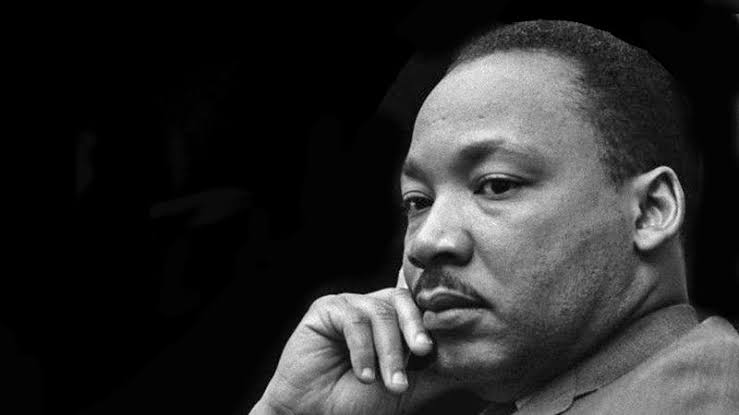
On August 28, 1963, a man in a dark suit stood before the Lincoln Memorial in Washington, D.C., and looked out at a crowd of 250,000 people. He had prepared a speech — a careful, political speech about civil rights. But as he spoke, something changed. A woman in the crowd shouted: "Tell them about the dream, Martin!"
He paused. He put down his prepared notes. And he began to speak from his heart — words that would echo through history:
"I have a dream that one day this nation will rise up and live out the true meaning of its creed: 'We hold these truths to be self-evident, that all men are created equal.'"
It was one of the most famous speeches in human history. It was not the speech he had planned to give. It was the speech that needed to be given.
This is the story of Martin Luther King Jr. — the man who dreamed a nation into change.
The Boy from Atlanta Michael King Jr. was born on January 15, 1929, in Atlanta, Georgia — the son of a Baptist minister and a schoolteacher. His father, Michael King Sr., was a respected pastor and civil rights leader who would later change his own name — and his son's — to Martin Luther King Sr. and Jr. — in honor of the Protestant reformer.
Martin grew up in the segregated South, where black and white children could not attend the same schools, drink from the same water fountains, or sit in the same seats on buses. But his parents taught him that segregation was not God's will. His father refused to accept segregation and led protests against it.
Martin was a brilliant student. He skipped two grades and entered Morehouse College at 15. He was ordained as a Baptist minister at 17. He went on to Crozer Theological Seminary and then to Boston University, where he earned a doctorate in theology.
It was at Boston University that he met Coretta Scott, a young singer and student from Alabama. They married in 1953 and had four children. She became his partner, his rock, and eventually, the keeper of his legacy.
The Montgomery Bus Boycott In 1954, Martin became pastor of the Dexter Avenue Baptist Church in Montgomery, Alabama. He was 25 years old — young, educated, and full of energy. He didn't know it yet, but he was about to become the face of a movement.
On December 1, 1955, a black woman named Rosa Parks refused to give up her seat on a Montgomery bus to a white passenger. She was arrested. The black community was outraged. A boycott of the bus system was organized. Martin Luther King Jr. was elected to lead it.
The boycott lasted 381 days. Black residents walked to work, shared rides, and organized carpools. The bus company lost 65% of its revenue. The city fought back — King's home was bombed, he was arrested, and he received death threats daily. But he never stopped.
He taught the people of Montgomery to resist with non-violence — a philosophy he had learned from Jesus and Mahatma Gandhi. He said:
"Darkness cannot drive out darkness; only light can do that. Hate cannot drive out hate; only love can do that."
In 1956, the Supreme Court ruled that segregation on public buses was unconstitutional. The boycott ended in victory. Martin Luther King Jr. was now a national figure.
The Movement Spreads In 1957, King and other civil rights leaders founded the Southern Christian Leadership Conference (SCLC). It became the leading organization of the civil rights movement.
Through the late 1950s and early 1960s, King led protests, marches, and sit-ins across the South. He organized the Birmingham campaign in 1963, where young students faced fire hoses and police dogs. The images were broadcast around the world. The world was horrified.
President John F. Kennedy introduced the Civil Rights Act in 1963. King led the March on Washington for Jobs and Freedom — the event where he delivered his "I Have a Dream" speech.
In 1964, the Civil Rights Act became law. In 1965, the Voting Rights Act followed. Martin Luther King Jr. had won. He was awarded the Nobel Peace Prize in 1964 — at the age of 35, the youngest recipient at that time.
The Controversies Martin Luther King Jr. was not universally loved. Many white Americans hated him. Many black Americans thought he was too slow, too moderate. The FBI, under J. Edgar Hoover, spied on him, wiretapped his phones, and tried to destroy his reputation.
He was arrested 29 times. He was stabbed in the chest by a mentally ill woman at a book signing in 1958. He received so many death threats that he told his wife: "You can't imagine what it's like to be hated."
He spoke out against the Vietnam War in 1967 — a controversial decision that lost him support from President Lyndon Johnson and many white allies. He said:
"A nation that continues year after year to spend more money on military defense than on programs of social uplift is approaching spiritual death."
He faced opposition from within his own movement — especially from younger, more radical activists like Stokely Carmichael, who rejected non-violence and demanded Black Power. But King refused to give up.
The Final Hours In April 1968, King was in Memphis, Tennessee, supporting a strike by black sanitation workers. He was exhausted. He had been working nonstop for months, and he was depressed. But he believed in the cause.
On the evening of April 3, 1968, he gave a speech that would be his last:
"I've been to the mountaintop. I've seen the promised land. I may not get there with you. But I want you to know tonight, that we, as a people, will get to the promised land."
He was staying at the Lorraine Motel. On April 4, 1968, he was standing on the balcony of his room when a shot rang out. He fell. He was rushed to the hospital. He died at 7:05 PM. He was 39 years old.
The assassin was James Earl Jones — no, James Earl Ray. He was caught and sentenced to 99 years in prison. But the truth of the assassination is still debated. The King family believed it was a conspiracy — and years later, a civil trial found that the government had been involved. The case remains a dark chapter in American history.
The Legacy Martin Luther King Jr.'s death sparked riots in over 100 cities across America. But his message of non-violence and love did not die. It grew.
In 1983, President Ronald Reagan signed a law creating Martin Luther King Jr. Day — a federal holiday honoring his birth. In 2011, the Martin Luther King Jr. Memorial was unveiled on the National Mall in Washington, D.C.
His words are quoted by presidents, activists, and schoolchildren. His face appears on posters, T-shirts, and murals around the world. He is remembered not just as a civil rights leader, but as a global symbol of justice.
He said:
"Faith is taking the first step even when you don't see the whole staircase."
He took the first step. He inspired millions to follow.
Lessons from Martin Luther King Jr.'s Life Non-violence is power — He faced violence with peace and won.
Dream big — He dreamed of a world that didn't exist yet.
Persistence defeats prejudice — He was arrested 29 times. He never stopped.
Love is stronger than hate — He said: "Love is the only force capable of transforming an enemy into a friend."
Speak truth to power — He criticized his own president over the Vietnam War.
Sacrifice is inevitable — He gave his life for the cause.
The dream continues — His work is not finished. It is up to us.
Conclusion Martin Luther King Jr. was not a perfect man. He had flaws. He had doubts. He made mistakes. But he was a man who stood up when it was easier to sit down. He spoke when it was safer to be silent. He dreamed when the world told him to stop.
He said:
"Life's most persistent and urgent question is: What are you doing for others?"
He answered with his life. He gave everything for others. He changed a nation. He inspired the world.
His dream is not yet fully realized. But because of him, we can still dream.