Mark Zuckerberg: The Dorm Room Coder Who Connected 3 Billion People
The fascinating story of Mark Zuckerberg — the 19-year-old Harvard student who built Facebook in his dorm room, turned down a $1 billion offer, survived scandals and lawsuits, and built the most powerful communication network in human history.
Chronica Editorial · · 9 min read
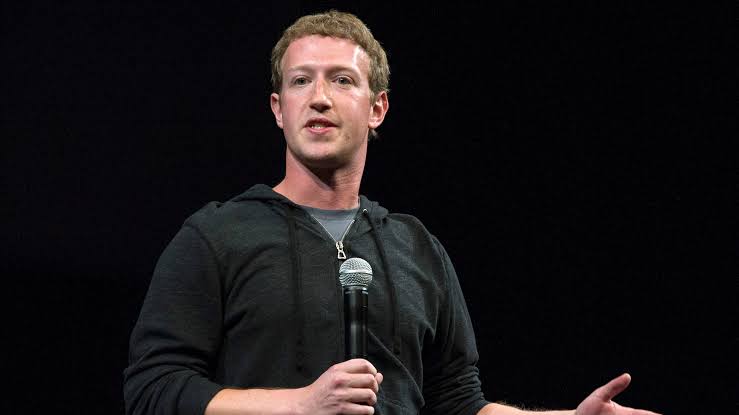
If you combined the populations of China, the United States, and Europe, you would still not reach the number of people who use the platforms Mark Zuckerberg built. Nearly 3 billion people log into Facebook every month — plus another 2 billion on Instagram and WhatsApp. No king, president, or emperor in history has ever commanded the attention of so many humans.
And it all started with a socially awkward teenager in a Harvard dorm room.
The Boy Who Talked to Computers
Mark Elliot Zuckerberg was born on May 14, 1984, in White Plains, New York, and raised in Dobbs Ferry, a small town nearby. His father Edward was a dentist, his mother Karen a psychiatrist — an ordinary, comfortable middle-class family.
But Mark was extraordinary in one way: code came to him like language.
In elementary school, he loved the game Risk — so he programmed a version of it on his Atari computer. When he was around 12, he built "ZuckNet" — a messaging system connecting his father's dental office computers with the family home. His father could be alerted about patients without yelling across the house. The family jokingly called it "Mark's first billion-dollar idea."
His parents hired a computer tutor, David Newman, who quickly ran out of things to teach — the boy was learning faster than the lessons. His friends' parents began paying him $1,000 to build programs for them. Meanwhile, at school, he built Synapse — a music player powered by artificial intelligence that learned a listener's taste. Microsoft and AOL reportedly offered to buy it — and offered jobs to the teenager.
Mark said no.
The Wunderkind at Exeter and Harvard
At Phillips Exeter Academy, one of America's elite prep schools, Zuckerberg excelled in everything — classical languages (he could read Latin, Greek, Hebrew, and French), fencing, mathematics, and of course, programming. He turned down job offers worth hundreds of thousands to attend Harvard University in 2002 — already known on campus as a "programming prodigy."
At Harvard, he didn't just code for fun. Sophomore year, students were buzzing about an online student directory the university refused to build. Mark decided to wait no longer.
Facemash: The Fire That Started It All
In October 2003, Zuckerberg built Facemash — a site that placed two student photos side by side and asked users to vote on who was "hotter." To get the photos, he hacked into Harvard's protected dorm ID databases.
The site went viral across campus within hours — and then exploded into scandal. Harvard's administration charged him with breach of security and violating privacy. The site was shut down in days. Mark apologized publicly. Some students demanded his expulsion.
It looked like the end of his campus reputation. Instead, it proved something enormous: a site built around people's profiles and photos could spread like wildfire.
The Dorm Room That Changed the World
On February 4, 2004, from his dorm room in Kirkland House, Zuckerberg launched "TheFacebook" — a cleaner, safer directory for Harvard students: profile, photo, friends list.
The site needed no marketing. Within 24 hours, 1,200 Harvard students signed up. Within a month, most of the campus. Zuckerberg expanded it college by college — Columbia, Stanford, Yale — keeping the exclusivity alive, building desire.
Then came the moment that defined his life. Investors and big companies circled. Facebook's growth was undeniable. Zuckerberg faced a choice every student dreams about: finish Harvard, or drop out and chase the rocket.
He moved to Palo Alto, California, for what he thought would be just a summer. He never came back. He dropped out of Harvard at 19 — joining the legendary dropout club of Gates and Jobs.
Betrayals, Lawsuits, and $1 Billion Refused
Success came with enemies, and Mark's story is full of them:
The Winklevoss Twins — Cameron and Tyler Winklevoss and Divya Narendra claimed Zuckerberg stole their idea for a social network called HarvardConnection. The lawsuit dragged for years and ended with a $65 million settlement — later immortalized (and dramatized) in the movie _The Social Network_ (2010). Zuckerberg himself dismissed the film's accuracy, saying his real motivation wasn't money or girls — it was _connecting people_.
Eduardo Saverin — his co-founder and best friend who funded the early days. As the company grew, Saverin was diluted out of the company in a bitter fallout that ended in court and another settlement. The friendship never recovered.
And then came the offer that made Zuckerberg a legend:
In 2006, Yahoo offered to buy Facebook for $1 billion. Facebook was only two years old. Everyone — investors, friends, advisors — said _take the money._ The board practically pushed him to accept. Zuckerberg walked into a meeting and said simply:
> _"This is kind of a formality... we're obviously not going to sell."_
He was 22 years old and refused a billion dollars. That decision is now considered one of the greatest in business history — Facebook today is worth over $1 trillion.
His guiding philosophy, printed on posters inside Facebook's offices:
> "Done is better than perfect." > "Move fast and break things." > "The biggest risk is not taking any risk."
The Empire Grows: 1 Million to 3 Billion
The milestones came at breathtaking speed:
- 2004: 1 million users - 2006: News Feed launches — users revolt at first, then it becomes the blueprint for all social media - 2007: Microsoft invests $240 million, valuing the young company at $15 billion - 2009: Facebook overtakes MySpace to become the world's biggest social network - 2010: _Time_ magazine names Zuckerberg Person of the Year — at 26 - 2012: 1 billion users; Facebook goes public in history's biggest tech IPO at the time - 2014: Buys WhatsApp for $19 billion (the largest tech acquisition ever at that point) and Instagram for $1 billion (2012) — deals that look like the bargain of the century today - 2017: 2 billion users - 2023: Threads launches and becomes the fastest-growing app in history — 100 million users in 5 days
By 23, Zuckerberg was the youngest self-made billionaire in history. Unlike Gates or Jobs, he never lost his company — he controlled it with special shares and outmaneuvered everyone who tried to push him out.
The Crashes: Privacy, Scandals, and Congress
But power of this scale comes with storms, and Zuckerberg weathered the worst:
Cambridge Analytica (2018) — it was revealed that data from 87 million Facebook users had been harvested without consent and used for political advertising. The world erupted. Facebook's stock lost over $100 billion in value in days. Zuckerberg was dragged before the U.S. Congress for 10 hours of testimony — sitting alone at a table, facing senators, while the world watched live.
He survived, but the scars remained. Whistleblower revelations, teenage mental health debates, misinformation accusations, and government antitrust suits followed for years. Ironically, the man who built the world's biggest connection machine became the world's most criticized CEO.
> _"The question isn't, 'What do we want to know about people?' It's, 'What do people want to tell about themselves?'"_
Reinvention: From Facebook to Meta
Most CEOs slow down after a decade. Zuckerberg pivoted everything. In October 2021, he renamed Facebook, Inc. to Meta — betting the company's future on the metaverse, virtual and augmented reality. He poured over $50 billion into the dream of a virtual world, absorbing years of mockery, falling stock prices, and investor rage. Meta's market value once crashed by $230 billion in a single day — the largest one-day loss in stock market history.
Then came the comeback. In 2023-2024, Meta cut costs, boosted profits to record highs, and its AI investments surged. The stock roared back. Zuckerberg — once the awkward nerd in a hoodie — emerged leaner, training in MMA and jiu-jitsu, and even challenging Elon Musk to a cage fight that trended worldwide.
At 40, he remains in complete control of the most powerful communication network ever built.
The Giving Pledge
Like Gates, Zuckerberg signed the Giving Pledge in 2010. In 2015, he and his wife Priscilla Chan pledged to give away 99% of their Facebook shares — hundreds of billions of dollars — through the Chan Zuckerberg Initiative, focusing on education, science, and curing disease.
He explained the birth of his daughter with words that surprised many who saw him as a cold businessman:
> _"Max, we love you and feel a great responsibility to leave the world a better place for you and all children."_
Lessons from Mark Zuckerberg's Life
1. Start before you're ready — He was 19, in a dorm, with no business plan. Code and courage were enough. 2. Hype is a strategy — Launching college by college made Facebook feel exclusive and desirable. 3. Refusing to sell can be the greatest decision — Walking away from $1 billion created a trillion-dollar company. 4. Own your vision — Control mattered as much as growth; he never let investors take the wheel. 5. Move fast and fix things — His mistakes were massive, but his ability to adapt kept him alive. 6. The audience is the asset — He understood early that attention, not technology, is the real gold.
Conclusion
Mark Zuckerberg's story is the ultimate paradox of our age. A shy, awkward kid who found it hard to connect with people face-to-face built the machine through which humanity connects more than anything else. He's been a hero, a villain, a visionary, and a villain again — depending on the day's headlines.
But the numbers tell their own story: from 1,200 Harvard students on day one to 3 billion humans today — one out of every two adults on Earth now touches something he built.
His childhood message system was called ZuckNet. The adult version is called Facebook. The lesson never changed: if you can build something people want, the world will beat a path to your door — even if your door is a dorm room.
_Is Facebook a force for good or the biggest time-waster in history? Share your honest opinion in the comments below!_