Leonardo da Vinci: The Artist Who Knew Everything
The story of Leonardo da Vinci — the greatest artist of the Renaissance, painter of the Mona Lisa and The Last Supper, who was also a scientist, inventor, and anatomist ahead of his time by centuries.
Chronica Editorial · · 6 min read
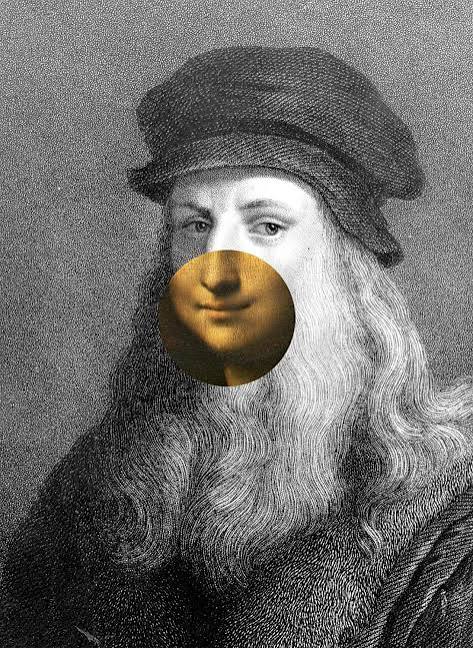
He painted the most famous smile in history. He painted the most famous dinner in history. But he also dissected corpses, designed flying machines, invented the parachute, and filled thousands of pages with ideas that were centuries ahead of their time.
He was Leonardo da Vinci — the ultimate Renaissance man. He was not just an artist. He was a scientist, an engineer, an anatomist, a botanist, a musician, a mathematician, and a philosopher. He was curious about everything — and he refused to stop asking questions.
He said:
"I have been impressed with the urgency of doing. Knowing is not enough; we must apply. Being willing is not enough; we must do."
The Illegitimate Genius Leonardo was born on April 15, 1452, in Vinci, a small town in Tuscany, Italy. His father was a wealthy lawyer; his mother was a peasant woman. They were not married. Leonardo was illegitimate — a fact that would define his life.
He could not attend university. He could not join the professional guilds. He received almost no formal education. He was an outsider.
But he was also free. He was not bound by the rules of the academy. He learned from nature — observing, testing, questioning. He called himself "a disciple of experience."
He said:
"I am a man without letters. I will cite greater things — experience — as my mistress."
The Artist's Apprentice At 14, Leonardo was apprenticed to Andrea del Verrocchio — one of the greatest artists in Florence. Verrocchio's workshop was a factory of the Renaissance — painting, sculpture, metalwork, chemistry, engineering. Leonardo learned everything.
One story from this time became legend. Verrocchio asked Leonardo to paint an angel in his painting The Baptism of Christ. Leonardo's angel was so beautiful — so soft, so lifelike — that Verrocchio put down his brush and never painted again.
Whether true or not, the message was clear: a genius had arrived.
The Artist: The Mona Lisa and The Last Supper Leonardo painted few paintings — fewer than 20 survive. But each one is a masterpiece.
The Last Supper — painted in 1495-1498 in Milan — is one of the most famous paintings in the world. It shows Jesus and his disciples at the moment he announces: "One of you will betray me." Each disciple reacts differently — shock, denial, anger, grief. It is a psychological drama frozen in time.
The Mona Lisa — painted between 1503 and 1519 — is the most famous painting in history. It is a portrait of Lisa Gherardini, a Florentine woman. Her smile is enigmatic — it appears and disappears depending on where you look. Leonardo worked on it for 16 years and never delivered it.
He said:
"Painting is poetry that is seen rather than felt, and poetry is painting that is felt rather than seen."
The Scientist: Anatomy, Engineering, and Flight Leonardo was not just an artist. He was a scientist. He dissected over 30 human corpses — by candlelight, in morgues, alone with the dead. He wanted to understand how the body worked — how muscles moved, how blood flowed, how the heart beat.
He drew the heart with its four chambers. He described atherosclerosis — hardened arteries — 150 years before official medicine. He made a glass model of the aortic valve to study blood flow. He was centuries ahead of his time.
He also designed machines — flying machines, armored tanks, diving suits, mechanical knights. He filled thousands of pages with sketches of helicopters, parachutes, and self-propelled carts. He was not just imagining the future. He was designing it.
He said:
"Learning never exhausts the mind."
The Unfinished Man Leonardo was famous for not finishing things. He started countless projects and abandoned them. The Sforza Horse — a planned 24-foot bronze horse — was never cast. The Battle of Anghiari — his grandest painting — was abandoned mid-wall. The Adoration of the Magi — unfinished. Saint Jerome — unfinished.
He wrote in his notebook:
"Tell me if anything was ever done... Tell me if ever I have done a thing."
He was easily distracted. A new curiosity could hijack him mid-project. His patrons complained. Pope Leo X said: "This man will never accomplish anything! He thinks of the end before the beginning!"
But in his distraction lay his power. He didn't see painting, engineering, and anatomy as separate. To him, it was all one subject: understanding the world.
The Final Years In 1516, Leonardo accepted an invitation from King Francis I of France. He was given the title of "First Painter, Engineer, and Architect to the King" and a manor house near the royal palace. He spent his final years as an honored guest, talking with the king for hours.
He died on May 2, 1519, at the age of 67. Legend says he died in the king's arms. He was buried in France.
His notebooks — 7,000 pages of the future — were scattered across Europe. They were lost, hidden, and sold for centuries. In 1994, Bill Gates bought one notebook for $30.8 million. In 2017, his painting Salvator Mundi sold for $450 million — the most expensive artwork ever sold.
Lessons from Leonardo da Vinci's Life Curiosity is genius — He asked questions about everything.
Learn from nature — He observed, tested, and questioned. Experience was his teacher.
Connect everything — Art and science are not separate. They are one.
Unfinished is human — Even the greatest genius left works incomplete.
Keep notebooks — 7,000 pages of thinking outlived him and changed the world.
Being an outsider is an advantage — He had no formal education. He was free to think for himself.
Simplicity is the ultimate sophistication — He said it. He lived it.
Conclusion Leonardo da Vinci was the greatest genius who ever lived. He was an artist, a scientist, an inventor, an anatomist, an engineer. He was curious about everything. He refused to stop asking questions.
He said:
"Simplicity is the ultimate sophistication."
He was simple. He was sophisticated. He was Leonardo.