Jack Ma: Rejected 30 Times, Failed Every Exam — Then Built China's Alibaba Empire
The unbelievable story of Jack Ma — the man who failed his college exams, was rejected from 30 jobs including KFC, and went on to build Alibaba, China's largest company, proving that failure is the best teacher of success.
Chronica Editorial · · 8 min read
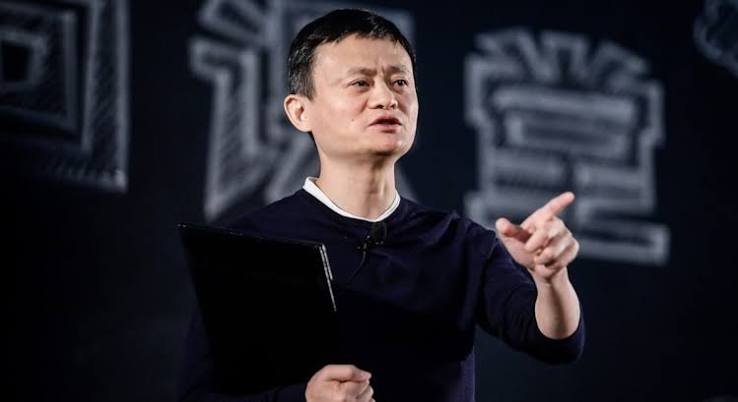
If there were a world championship for failure, Jack Ma would have won it before he ever won at business. He failed his exams. He was rejected from 30 jobs. Even KFC — a fried chicken restaurant — refused to hire him. Harvard turned him down ten times.
And yet, this man built Alibaba, one of the largest companies on Earth, and became China's richest man. His story is proof that the world's biggest losers can become its biggest winners.
The Boy Who Talked to Tourists Ma Yun — later known to the world as Jack Ma — was born on September 10, 1964, in Hangzhou, China, into a poor family. His parents were traditional musicians and storytellers. Money was scarce. China at that time was closed to the outside world.
But young Jack had one obsession: learning English.
At age 12, he woke up early every morning and rode his bicycle to the Hangzhou Hotel — the one place in the city where foreign tourists stayed. For nine years, he gave free tours to tourists, rain or shine, not for money, but to practice English. They corrected his grammar and told him stories about the outside world.
One tourist friend, Ken Morley from Australia, became so close that he later sent Jack money to help him through college, and even invited him to Australia in 1985 — Jack's first trip outside China.
He said:
"A pen pal saved my life. Without those free tours, there would be no Alibaba."
The Champion of Failure Jack Ma's academic record is one of the most hilarious failure stories in business history:
Primary school: Failed twice
Middle school: Failed again
College entrance exam: Failed three times. The first attempt, he scored 1 out of 120 in mathematics. One point.
Harvard: Applied and was rejected ten times
Jobs: Applied to 30 jobs and was rejected by every single one
The most famous rejection came at KFC. When the fried chicken chain opened in Hangzhou, 24 people applied for the job. 23 were hired. The only one rejected was Jack Ma.
He also applied to be a police officer — 4 applied, 3 were accepted, and he was the only one cut.
He said:
"I failed so many times. I went for a job with KFC — 24 people applied, 23 got hired. I was the only one not hired."
Years later, these rejections became his armor. When the internet business crushed him again and again, nothing surprised him anymore. Failure was his normal.
1995: The Discovery That Changed China In 1995, Jack Ma — now an English teacher — traveled to the United States to help translate a business deal. The trip went badly, but in Seattle, a friend showed him something magical: the Internet.
Jack typed his first search: "beer." Results showed German beer, American beer, Japanese beer — but no Chinese beer. He searched "China" — almost nothing came back.
His mind exploded. China — a nation of over a billion people — was completely invisible on the internet. He quit his teaching job that year and returned home with a borrowed computer and a vision.
He started China Yellow Pages, one of China's first internet companies. Everyone called him crazy. The company failed.
The Apartment Speech: 18 People, $60,000, One Dream In 1999, at age 35, Jack Ma gathered 17 friends and students in his small apartment in Hangzhou. No fancy office. No investors. Just a sofa, a television playing a news report about the internet, and a man with a dream.
He gave a legendary speech — recorded on video — that has become business history:
"We are going to be a great company... If our competitors are strong, we will be stronger. Alibaba will change the lives of billions of people... Our competitors are in Silicon Valley and Europe. But China is ours."
He asked them to pool their savings. Together they scraped together about $60,000. The site launched with one clear mission:
"Let there be no difficult business in the world."
Alibaba.com — a marketplace connecting Chinese manufacturers with the world — was born.
Six Minutes That Raised $20 Million Investors rejected Alibaba again and again — he collected over 30 rejections in Silicon Valley, including from investors who laughed him out of their offices.
Then came one of the most famous meetings in venture capital history. Masayoshi Son, the legendary founder of Japan's SoftBank, gave Jack Ma exactly six minutes to pitch. Ma spoke about his vision, his mission, and his failures.
Son interrupted: "You keep the same look as the people I admire." Before the pitch time was even over, Son decided: SoftBank would invest $20 million.
That investment grew into one of the most profitable in history, worth tens of billions.
David vs. Goliath: How Taobao Ate eBay In 2002-2003, the American giant eBay — the world's biggest online marketplace — entered China and bought out its local competitor. Everyone said Alibaba was finished. eBay had billions; Jack Ma had a startup.
So Jack quietly created Taobao — a free consumer marketplace — and launched it in secret from a team that worked in a hidden apartment. While eBay charged listing fees, Taobao was free for sellers. While eBay ignored local needs, Taobao added chat features so buyers and sellers could talk like humans.
Three years later, eBay closed its China operations in defeat. Jack Ma — the man rejected by KFC — had defeated one of Silicon Valley's giants on his home soil.
The $25 Billion IPO — The Biggest in History On September 19, 2014, Alibaba listed on the New York Stock Exchange. The offering raised $25 billion — the largest IPO in world history at that time. When Jack Ma rang the opening bell, the shy English teacher who once earned $12 a month was suddenly worth over $20 billion and was named the richest man in China.
But unlike most CEOs, Ma never presented himself as a tech genius. He couldn't code. He once joked:
"I'm not a tech guy. I'm looking at the internet with a beginner's mind. That's my advantage."
His genius was vision, storytelling, and people.
The Fall: The Speech That Silenced the King In 2019, at age 55 — on Chinese Teachers' Day — Jack Ma stepped down as Alibaba's chairman, saying he wanted to return to his first love: education.
Then came the moment that changed everything.
In October 2020, at a financial summit in Shanghai, Ma delivered a fiery speech criticizing Chinese regulators. Days later, the Chinese government suspended the $37 billion IPO of Ant Group — which would have been the largest in history — just two days before listing.
Then, Jack Ma essentially vanished from public view. For over three months, he made no public appearances. The world's media ran headlines: Where is Jack Ma? His empire's stock lost over $100 billion in value.
He eventually reappeared — quieter, rarely speaking publicly. His fortune fell, but his influence on the world's business history remains permanent.
Lessons from Jack Ma's Life Failure is the best university — He failed at everything, and that's exactly why nothing could stop him later.
Rejection is protection — Every "no" redirected him toward a bigger "yes."
Learn constantly — Nine years of free tours gave him English, and English gave him the world.
See what others can't — In 1995, the whole of China was invisible online; he saw a billion-dollar gap.
Heart beats money — Investors followed his belief, not his business plan.
Think in decades, act today — "Today is hard, tomorrow is harder, but the day after tomorrow is beautiful."
Stay humble — The richest man in China still called himself a teacher first.
Conclusion Jack Ma's story is the ultimate underdog epic. A skinny kid from a poor family who failed math, lost every job interview, and couldn't even get hired at KFC — went on to build a company that touches over a billion people daily.
He himself summarized it best:
"Never give up. Today is hard, tomorrow will be worse, but the day after tomorrow will be sunshine. If you give up tomorrow, you will never see the sunlight."
He was rejected 30 times — and each rejection carved one more piece of the legend. The message for every dreamer is simple: the world doesn't remember how many times you fell; it remembers how big you stood back up.