Imran Khan: The Man Who Won Everything — World Cup, a Hospital, and a Country's Heart
The inspiring story of Imran Khan — from a "lucky" debutant mocked by critics, to Pakistan''s greatest cricket captain, to the man who built Pakistan''s first free cancer hospital with donations, and finally became Prime Minister at 66 after 22 years of struggle.
Chronica Editorial · · 12 min read
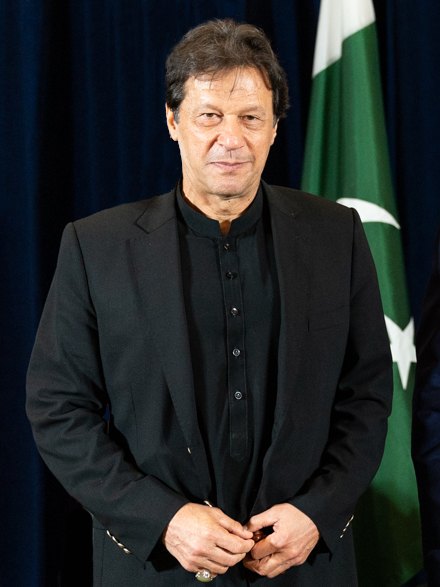
In 1992, under floodlights in Melbourne, a 39-year-old captain with a tired body and a receding hairline stood on the podium, lifting the Cricket World Cup trophy. Twenty-six years later, the same man stood in Islamabad, taking the oath as Prime Minister of Pakistan.
Between those two moments lay a story of mocking, failure, personal tragedy, impossible dreams — and an unbreakable refusal to quit.
This is the story of Imran Khan — Pakistan's greatest all-rounder, its most successful captain, the builder of a free cancer hospital, and ultimately, the leader of a nation.
The Shy Boy From Lahore
Imran Ahmad Khan Niazi was born on October 5, 1952, in Lahore, into a respected, well-educated Pashtun family of the Niazi tribe. His mother came from the famous Burkis family of Lahore. He was quiet, shy, and grew up surrounded by sisters — five of them — who helped soften his manner but never his competitive fire.
He studied at Aitchison College and later at Keble College, Oxford, where he studied Philosophy, Politics, and Economics. Cricket was never the family business — education was. Cricket was the obsession he pursued on the side.
At 18, he made his Test debut for Pakistan against England in 1971. It went badly. Critics were merciless:
He is a debutant who cannot bat, cannot bowl, and cannot field.
The tag that stuck with him for years: "Imran Khan — a lucky debutant." Nothing about him looked special. Thin frame, no remarkable pace, no big technique. Sports writers essentially wrote him off.
They had no idea what was coming.
Building Himself Into a Machine
Imran Khan's early career is one of the greatest examples of self-transformation in sports history. Realizing talent alone wasn't enough, he did something Pakistani cricketers rarely did — he studied the game scientifically.
- He worked on his body like a professional athlete years before fitness became common in cricket — bulking up, strengthening, running. - He learned to bowl the outswinger, then the reverse swing — a delivery that would later become Pakistan's secret weapon and change cricket forever. - He studied batsmen's weaknesses like an engineer studies a machine.
His turnaround began in England in the late 1970s, playing county cricket for Sussex — where a captain's comment changed his life. After Imran took wickets, his county captain told him he could become a great bowler — if he learned to be hungry for wickets, not just a place in the team.
Imran took it personally. From that day, he decided he wouldn't just be in teams — he would carry teams.
By the 1980s, he was the world's finest all-rounder — a genuine fast bowler who could also bat like a top-order batsman. His rivalry with the other three great all-rounders of the era — Ian Botham, Richard Hadlee, and Kapil Dev — defined a decade of cricket. Many rate Imran the best of them all.
Captain Cool: Building Cornered Tigers
In 1982, Imran became captain of Pakistan — a team famously described as "mercurial, unpredictable, brilliant one day and hopeless the next." Previous captains had failed to discipline the talented chaos.
Imran changed everything. He built a culture of fearlessness — young players were told to attack, never to defend. He famously promoted young talent: Wasim Akram, Waqar Younis, Inzamam-ul-Haq, Mushtaq Ahmed, Saqlain Mushtaq — legends he personally discovered, nurtured, and threw into the fire.
His philosophy became legendary:
A captain is only as good as his team's performance. My job was to create characters who could fight.
He taught his players one central idea — the idea that would define 1992: when you are cornered, you fight harder. Pakistan's team in that era became known as the "Cornered Tigers."
But the journey to the World Cup almost never happened.
1992: The Impossible Dream
Before the 1992 World Cup, Pakistan was in chaos. Imran had retired from international cricket, been begged to return, and was playing with a chronic shoulder injury that made bowling painful. He was 39 — ancient by cricketer standards. The public was fed up. Critics wanted him gone. Some fans even spat on players after a humiliating loss to India.
Then came the low point of the tournament: Pakistan slumped to two wins from five matches, needing to win every remaining game just to survive. The team's performance was so poor that Imran made a bizarre public statement blaming a "boring" cricket ball — and got mocked worldwide.
In the dressing room, he gave his players the speech that became history. He told them to stop worrying about results and fight like cornered tigers:
The pressure is not on us — the pressure is on the teams that fear losing to us.
What followed was one of sport's greatest comebacks:
- Pakistan beat Australia - Then Sri Lanka - Then New Zealand — the unbeaten tournament leaders - In the semi-final, against New Zealand again, a young Inzamam-ul-Haq — whom Imran had refused to drop despite pressure — smashed 60 runs off 37 balls and changed the match forever - And on March 25, 1992, in Melbourne, Pakistan faced England in the final
Chasing 250, Pakistan collapsed to 70+ for 3, and then Imran — the captain with the bad shoulder — walked in and played his final great innings: 72 runs. Wasim Akram ripped through England's tail. Imran took the final catch himself.
Pakistan — the team everyone had written off — was World Champion.
Imran lifted the trophy wearing a T-shirt with a white tiger on it — the symbol he had promised his team would represent them as "cornered tigers."
That night, he was 39 years old, and he had conquered everything cricket could offer. Most men would retire into comfort.
Imran Khan was just getting started.
The Promise That Built a Hospital
Behind Imran's cricket success lay a private wound. In 1985, his mother, Shaukat Khanum, died of cancer. What broke him wasn't just her death — it was how she suffered.
In Pakistan at that time, there was not a single free cancer hospital. His mother — from a wealthy, connected family — had to be taken to London for treatment, because proper cancer care in Pakistan was either absent or unaffordable. Poor patients simply died at home, untreated.
Imran made a vow that everyone thought was insane:
I will build a cancer hospital in Pakistan where the poor are treated free.
The experts laughed. Building a modern cancer hospital costs hundreds of millions. It requires doctors, machines, laboratories, and an endless supply of money. Cricket stars don't build hospitals.
He started with almost nothing — charity cricket matches, personal appearances, endless fundraising tours. Some in Pakistan even accused him of using the hospital as a political stepping stone. The project moved at a painfully slow pace.
In 1994, the Shaukat Khanum Memorial Cancer Hospital & Research Centre opened in Lahore — named after his mother. It was, and remains, Pakistan's first and largest free cancer hospital, where roughly 75% of patients receive completely free treatment, funded almost entirely by donations.
To date, the hospital has treated over a million cancer patients, most of them too poor to pay. A second hospital opened in Peshawar, with more planned.
The man the experts laughed at had built an institution that saves lives every single day. Even his fiercest critics call this his greatest achievement — greater than the World Cup.
He didn't stop there. In 2008, he founded Namal University in Mianwali — one of Pakistan's most remote and underdeveloped regions — bringing higher education to thousands of students who would never have had it.
Entering the Snake Pit: Politics
In 1996, Imran Khan entered politics, founding his own party: Pakistan Tehreek-e-Insaf (PTI) — the Movement for Justice.
If the hospital experts had laughed, political analysts howled. He had no party structure, no funding, no establishment backing. In his first election in 1997, PTI won almost nothing. In 2002, his party won just one seat — his own. Political comedians called PTI a "one-man party."
For over a decade, he was the joke of Pakistani politics:
Imran Khan will never be Prime Minister. Never.
Election after election, he lost. Rally after rally, he spoke to small crowds. Most politicians would have quit within five years. Imran spent 22 years building — through boycotts, jail threats, party splits, and endless mockery.
But two things slowly turned the tide:
1. The 2013 election — PTI became the second-largest party by votes, winning Khyber Pakhtunkhwa province. Critics said he'd fail there too. His government instead built a reputation for health reforms (a state-run health insurance program) and a police-planting initiative — the Billion Tree Tsunami, later praised internationally by the UN and environmentalists.
2. The youth wave — millions of young Pakistanis, born after the 1992 World Cup, connected with his message against corruption and for a "Naya Pakistan" (New Pakistan). The cricket stadium chants became political rally chants.
2018: Prime Minister at Last
On August 18, 2018 — 22 years after founding his party — Imran Khan was sworn in as the 22nd Prime Minister of Pakistan. He was 66 years old.
In his first address to the nation, he spoke about the cornered tigers of 1992, the hospital built from nothing, and the dream of a welfare state like the one he believed existed at the time of Prophet Muhammad (PBUH) — the State of Madinah, focused on justice, welfare, and rule of law.
His government's years included major initiatives — a massive tree-planting campaign, the Ehsaas welfare program, health cards for millions of families, and a strong diplomatic voice for Muslim causes, including leading the OIC on Islamophobia. His era also faced severe economic storms, a global pandemic, and intense criticism over inflation and governance — as every government in Pakistan's history has.
Then came the twist that made history: in April 2022, Imran Khan was removed from office through a no-confidence vote — the first prime minister in Pakistan's history to be ousted this way. He claimed foreign interference; his opponents denied it.
What followed stunned political analysts everywhere. Instead of fading away, he became more popular than ever — drawing some of the largest political rallies in Pakistan's history, with hundreds of thousands attending his jalsas across the country. His party swept by-elections. In late 2022, he survived an assassination attempt at a rally in Wazirabad, shot in the leg — and addressed supporters from a hospital bed within days.
In 2023, he was arrested and later sentenced in multiple cases, which he and his party maintain were politically motivated. In 2024, despite being in prison, his party-backed independent candidates won the largest number of seats in the general election — a result unprecedented for a jailed leader.
Whatever one's political view — supporter or critic — one fact is undeniable: very few leaders in modern history have commanded this level of loyalty from millions.
The Cancer That Beat a Legacy Name
Even personal tragedy couldn't slow his institution. In 2023, when his own health was tested in prison, the irony wasn't lost on observers: the man who built Pakistan's greatest cancer hospital had spent decades honoring his mother's memory — and giving free treatment to over a million patients who would otherwise have died.
Shaukat Khanum Hospital today stands as proof of a promise made by a cricketer to his dead mother — kept for over 30 years.
Lessons from Imran Khan's Life
1. Talent is overrated — transformation is everything — A "lucky debutant" rebuilt himself into the world's best all-rounder through sheer study and grind. 2. Build a team of cornered tigers — He discovered and empowered Wasim, Waqar, Inzamam. Great leaders create leaders. 3. Pain can build institutions — His mother's death didn't just break his heart; it built a hospital that saves millions. 4. Fail for 22 years and keep going — One seat in parliament, mocked by everyone — and still Prime Minister at 66. 5. Deliver on promises, not just words — The hospital, the university, the trees — he built things, not just slogans. 6. Popularity earned in stadiums can become trust in politics — Character built in one arena transfers to another. 7. Never accept the label others give you — "Can't bat, can't bowl, can't field" became "greatest captain of the century."
Conclusion
Imran Khan's life is the rare story where every act has two halves — the dream and the delivery:
- He dreamed a World Cup — and lifted it at 39. - He dreamed a hospital — and treated over a million poor patients for free. - He dreamed a university — and educated thousands in one of Pakistan's poorest districts. - He dreamed the Prime Minister's office — and reached it after 22 years of rejection.
Critics will debate his politics for decades. Supporters will defend them for longer. But in the story of his life, one chapter is beyond argument — the one written in the dressing room in 1992, in the wards of Shaukat Khanum, and in the nursery of a billion trees:
When Imran Khan was cornered, he fought. And history shows he usually won.
He said it himself, decades ago, and it remains the one-line summary of his entire life:
Never give up, no matter how hard life gets. Because if you keep believing in yourself, one day your dream will come true."_
What inspires you most about Imran Khan — the cricketer, the philanthropist, or the fighter? Share your thoughts in the comments below!