Frida Kahlo: The Woman Who Painted Her Pain and Became a Legend
The extraordinary story of Frida Kahlo — the Mexican artist who survived a devastating bus accident, painted her pain and identity on canvas, and became one of the most influential artists of the 20th century.
Chronica Editorial · · 6 min read
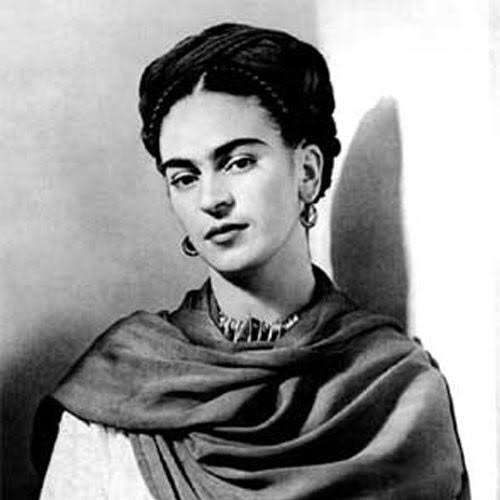
On September 17, 1925, an 18-year-old girl was riding a bus in Mexico City when it collided with a streetcar. The accident was catastrophic. A metal handrail pierced her body, breaking her spine, her collarbone, her ribs, her pelvis, and her right leg. She was impaled. She was not expected to survive.
She did survive. But she would spend the rest of her life in pain — enduring over 30 surgeries, wearing body casts, and suffering in ways that few can imagine.
She turned that pain into art. She painted herself — her suffering, her identity, her Mexican heritage, her love, her heartbreak. She became Frida Kahlo — one of the most famous artists in history.
The Girl Who Was Different Magdalena Carmen Frida Kahlo y Calderón was born on July 6, 1907, in Coyoacán, a suburb of Mexico City. Her father was a German photographer; her mother was Mexican of Spanish and Indigenous descent. Frida grew up in the Blue House — La Casa Azul — a home that would become her sanctuary and, later, a museum.
At six, she contracted polio, which left her right leg thinner than her left. She wore long skirts to hide it. She was different — and she knew it.
She was not interested in being an artist. She wanted to study medicine. She was smart, rebellious, and full of life. She attended the National Preparatory School — one of the first girls to do so — and joined a group of intellectual students who called themselves the Cachuchas.
It was at school that she first saw Diego Rivera — the famous muralist — painting a mural in the auditorium. She played a prank on him. He was amused. She was 15. He was 36. It was their first meeting.
The Accident The bus accident changed everything. Frida was impaled by a handrail that entered her abdomen and exited through her vagina. Her spine was broken in three places. Her right foot was crushed. Her pelvis was shattered. She was bedridden for months.
She later said:
"I lost my innocence. I lost my health. But I gained something else — I gained the need to paint."
While she recovered, confined to her bed, her mother brought her a special easel that allowed her to paint lying down. Her father gave her paints. She painted. She painted herself.
She said:
"I paint myself because I am so often alone. Because I am the subject I know best."
The Artist Emerges Frida recovered enough to walk — but she never fully healed. She married Diego Rivera in 1929. He was 42. She was 22. Their marriage was passionate, turbulent, and full of infidelities — both hers and his. He had affairs with her sister. She had affairs with men and women.
She said:
"There have been two great accidents in my life. One was the streetcar. The other was Diego. Diego was by far the worst."
She painted through her pain. She painted her miscarriages. She painted her surgeries. She painted her broken spine. She painted her love for Diego. She painted her Mexican identity — the folk art, the colors, the indigenous traditions.
Her style was unique. It was surreal, but not surrealism. She said:
"They thought I was a surrealist. I wasn't. I never painted dreams. I painted my own reality."
She painted:
The Two Fridas — her split identity, one in a European dress, one in a Mexican dress, their hearts exposed and connected by a vein.
Henry Ford Hospital — her miscarriage, painted with brutal honesty.
The Broken Column — her spine replaced by a shattered column, her body held together by a corset.
Self-Portrait with Thorn Necklace and Hummingbird — her suffering and her resilience.
She painted herself because she was the subject she knew best. She painted her pain because she could not escape it.
The Fame Frida's work was not widely recognized during her lifetime. She was known mostly as Diego Rivera's wife. She had a few exhibitions — one in New York, one in Paris — but she never achieved the fame she deserved.
Her only solo exhibition in Mexico was in 1953. She was so ill that her doctors told her not to go. She insisted. She had herself carried to the gallery in her bed. She spent the evening in her bed, surrounded by friends and admirers.
She said:
"I am not sick. I am broken. But I am happy to be alive as long as I can paint."
The Final Years Frida's health declined. She had gangrene in her right foot, which was amputated in 1953. She fell into depression. She attempted suicide. She continued to paint — but her body was failing.
She died on July 13, 1954, at the age of 47. The cause was reported as a pulmonary embolism. Some believe she died of an overdose. Her last diary entry read:
"I hope the exit is joyful — and I hope never to return."
She was cremated. Her ashes are in the Blue House — the home where she was born, where she lived, where she died, and where her legacy lives on.
The Legacy After her death, Frida's work was largely forgotten. It was rediscovered in the 1970s — during the feminist movement — and she became an icon. Her face — with the unibrow, the flowers in her hair, the bold gaze — became a symbol of female empowerment, of Mexican identity, of artistic courage.
Today, she is one of the most famous artists in the world. Her paintings sell for millions. Her image is on T-shirts, bags, and murals. She is the subject of films, books, and exhibitions.
She said:
"Feet, what do I need you for when I have wings to fly?"
She had wings. She flew. She painted her pain and became a legend.
Lessons from Frida Kahlo's Life Turn pain into art — She painted her suffering and made it beautiful.
Be yourself — She never tried to be anyone else. She was Frida.
Love fiercely — She loved Diego, even when he hurt her.
Embrace your identity — She celebrated her Mexican heritage and her womanhood.
Never stop creating — She painted until the end, even when her body failed.
Resilience is power — She survived accidents, surgeries, and heartbreak. She kept going.
Legacy outlives the body — She died at 47. Her art lives forever.
Conclusion Frida Kahlo was not just a painter. She was a survivor. She was a revolutionary. She was a woman who took her pain and turned it into beauty.
She said:
"I am my own muse. I am the subject I know best. The subject I want to know better."
She knew herself. She painted herself. She became herself.
She was Frida Kahlo. And she will never be forgotten.