Charles Darwin: The Man Who Rewrote the Story of Life
The extraordinary story of Charles Darwin — the reluctant revolutionary who spent five years on a voyage around the world, discovered the theory of evolution, and changed how we understand life itself.
Chronica Editorial · · 8 min read
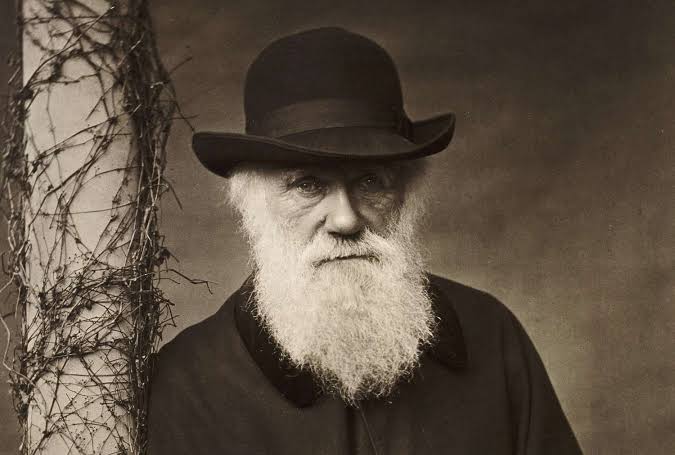
On December 27, 1831, a young man boarded a ship called HMS Beagle and set sail for a five-year voyage around the world. He was 22 years old, a college dropout with no clear career, a passion for collecting beetles, and a wealthy father who thought he was wasting his life.
The voyage made him a legend.
He was not the first to suggest that life evolves. But he was the first to explain how — a simple, elegant mechanism called natural selection. It was the most important idea in the history of biology. It explained the diversity of life, the fossil record, the similarities between species, and the origin of humanity itself.
His name was Charles Darwin. And his story is one of patience, courage, and a quiet revolution.
The Boy Who Loved Beetles Charles Robert Darwin was born on February 12, 1809, in Shrewsbury, England. His father was a wealthy doctor. His grandfather, Erasmus Darwin, was a famous physician and poet who had written about evolution — a dangerous idea at the time.
Charles was a mediocre student. He was bored by Latin and Greek. He was sent to the University of Edinburgh to study medicine but dropped out after watching surgery performed without anesthesia — it horrified him. His father then sent him to Cambridge to study for the clergy — a respectable career for a gentleman.
But Charles was not interested in the church either. He was interested in beetles. He collected them obsessively — hunting through ponds, under bark, and in meadows, catching them with his bare hands. He once put a beetle in his mouth to free his hand for another — and the beetle released a burning chemical that made him spit it out.
He became friends with John Stevens Henslow, a professor of botany who recognized Darwin's talent. Henslow recommended him for the position of naturalist on the HMS Beagle — a survey ship preparing for a voyage around the world. The captain, Robert FitzRoy, wanted a gentleman companion — not just a scientist — to keep him company on the long journey.
Darwin's father thought it was a waste of time. But he finally agreed, partly because his sister-in-law told him: "He is such a nice boy. He will be a good companion for the captain."
Charles Darwin almost didn't go.
The Voyage of the Beagle The Beagle left England on December 27, 1831. It was a small, cramped ship — 90 feet long — with 74 people on board. Darwin was seasick from the very first day. He spent much of the voyage vomiting in his hammock.
But he was in paradise. He explored the coasts of South America — Brazil, Argentina, Chile, Peru. He collected thousands of specimens: birds, insects, plants, fossils, minerals. He sent them back to England in crates. He kept detailed notes and sketches.
He saw things no European had ever seen:
Giant fossils of extinct mammals in Patagonia — including a giant sloth and a giant armadillo — that looked strangely like the animals still living there.
Marine shells high in the Andes mountains — evidence that the land had been lifted from the sea.
The Galápagos Islands — a volcanic archipelago off the coast of Ecuador — where each island had its own unique species of tortoise and finch.
The Galápagos was the turning point. Darwin noticed that the tortoises on different islands had different shells — and the finches had different beaks, adapted to different foods. They were similar, but not the same. Why?
He began to wonder if species could change over time.
The Years of Silence Darwin returned to England in 1836. He was famous — his collections had made him a respected scientist. But he did not publish his theory of evolution. He was afraid.
The idea that species could change — that life had evolved — was considered heresy. It contradicted the Bible. It would destroy his reputation and possibly his social standing. He was a wealthy gentleman with a wife, a family, and a place in society. He had everything to lose.
So he waited.
He waited 20 years.
He filled his notebooks with observations, experiments, and questions. He studied barnacles for eight years — a tiny, boring subject that taught him more about variation and adaptation than anything else. He wrote to scientists around the world, asking for data. He tested his ideas against every piece of evidence he could find.
He married his cousin, Emma Wedgwood, in 1839. They had ten children — seven survived to adulthood. Three died in childhood, a tragedy that broke his heart. His daughter Annie died at 10 — he wrote a moving memorial to her that revealed his deep grief and his loss of faith in a benevolent God.
In 1858, Darwin received a letter from Alfred Russel Wallace — a young naturalist working in Indonesia. Wallace had independently discovered the theory of natural selection and wanted Darwin's advice on publishing it.
Darwin was shocked. He had been scooped. He had waited too long. But he was also relieved — Wallace was a young, unknown scientist, and the theory would now be published jointly. In July 1858, Darwin and Wallace presented their findings together at the Linnean Society in London.
The world did not notice. The revolution was silent.
The Origin of Species In 1859, Darwin finally published his book: On the Origin of Species by Means of Natural Selection. It was 500 pages long and filled with evidence from his years of observation.
The book argued that:
Species are not fixed. They change over time.
The mechanism is natural selection — individuals with traits better suited to their environment survive and reproduce, passing on those traits.
Over millions of years, this process produces new species.
All living things share a common ancestor.
The first edition sold out on the first day. It was a sensation. It was also a scandal.
The Church condemned it. Scientists debated it. Darwin was mocked, praised, and hated. One bishop famously asked him if he was descended from a monkey on his grandfather's or grandmother's side. Darwin's friend Thomas Henry Huxley — "Darwin's bulldog" — defended the theory in public debates.
Darwin himself stayed out of the fight. He was sick — probably from a tropical disease he had caught on the voyage, or perhaps from the stress of his work. He spent the rest of his life at Down House, his country home, writing and revising.
He published The Descent of Man in 1871 — explicitly including humans in the story of evolution. It was another shock. But the evidence was overwhelming.
The Final Years Darwin died on April 19, 1882, at the age of 73. He was buried in Westminster Abbey — next to Isaac Newton. The man whose theory had seemed to destroy religion was honored by the Church of England.
His theory is now the foundation of all biology. It has been confirmed by genetics, the fossil record, and molecular biology. It is one of the most successful scientific theories in history.
He said:
"There is grandeur in this view of life, with its several powers, having been originally breathed into a few forms or into one; and that, whilst this planet has gone cycling on according to the fixed law of gravity, from so simple a beginning endless forms most beautiful and most wonderful have been, and are being, evolved."
He saw grandeur in evolution — not just struggle. He saw beauty in the endless forms of life.
Lessons from Charles Darwin's Life Patience is power — He waited 20 years before publishing.
Observation is everything — He collected beetles, barnacles, and birds — and changed biology.
Great ideas need evidence — His theory survived because he tested it against everything.
Courage is quiet — He was afraid, but he published anyway.
Collaboration matters — Wallace forced him to act. The theory became stronger.
Adversity can be a teacher — His daughter's death deepened his understanding of life.
Truth wins in the end — The Church that opposed him now accepts evolution.
Conclusion Charles Darwin was not a revolutionary by nature. He was a quiet, sickly, wealthy gentleman who loved beetles and barnacles. He did not want to fight. He did not want to be famous. He just wanted to understand.
But his understanding changed everything. He showed us that life is not static — it is a story, unfolding over billions of years. He showed us that we are not separate from nature — we are part of it. He showed us that the simplest ideas can change the world.
He said:
"It is not the strongest of the species that survives, nor the most intelligent that survives. It is the one that is most adaptable to change."
He was adaptable. He changed. And he taught us that the story of life is still being written.